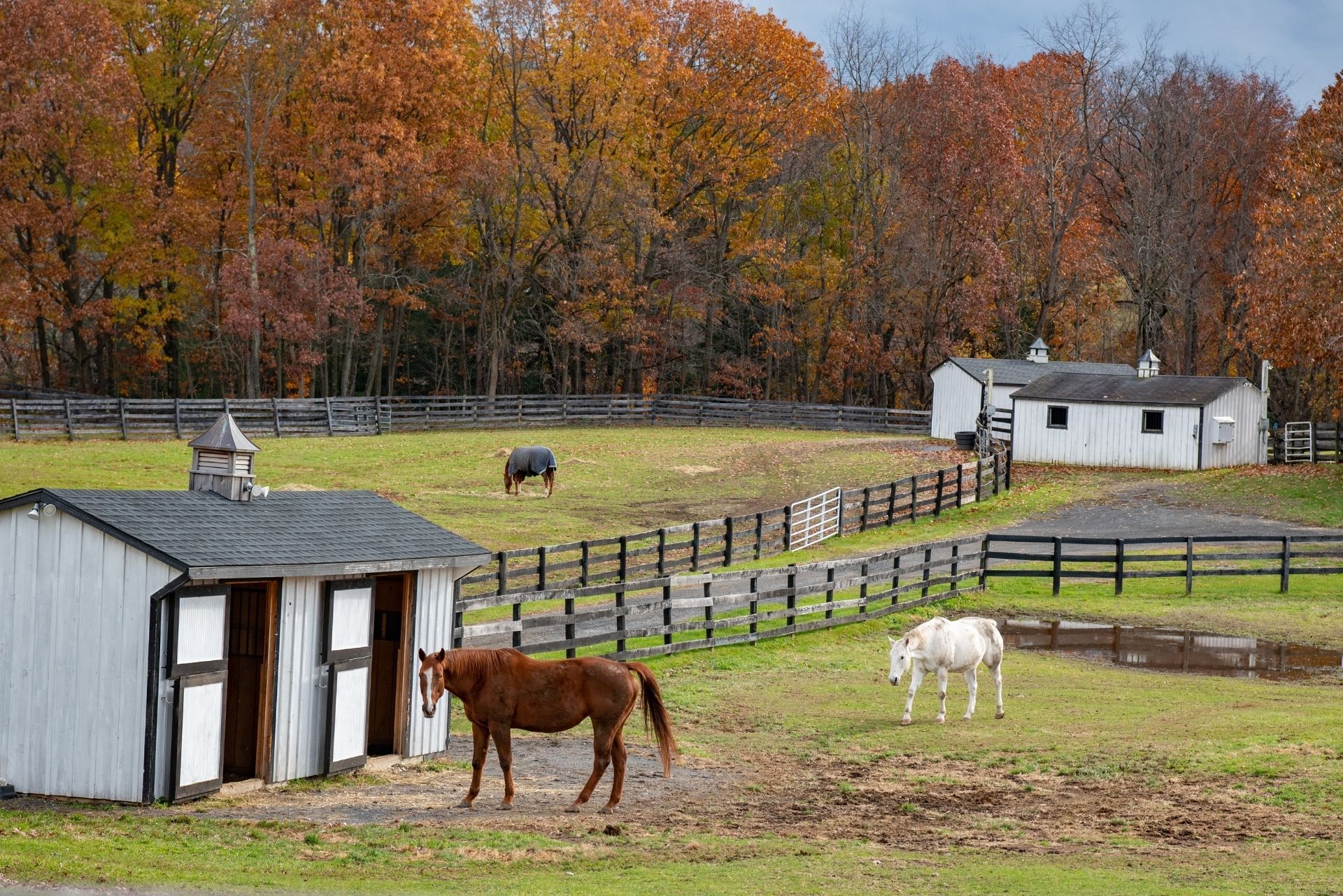
Pennsylvania Equine & Horse Farm Insurance

See How We're Different:
Call Us: 717-838-5464
On a quiet weekday morning in Pennsylvania, a colic emergency, a barn accident, or a loose horse on a country road can go from stressful to financially devastating in a matter of hours. Veterinarian bills, liability claims, and property damage rarely arrive one at a time, and they never wait until it is convenient. A statewide economic impact study by the American Horse Council, highlighted by the Pennsylvania Equine Council, shows how deeply horses are woven into the state’s jobs, land use, and local economies, which means the financial ripple effects of a single loss can be wide reaching according to that economic impact study.
Equine and horse farm insurance exists to keep those worst case scenarios from turning into long term setbacks. It is not just about protecting a single valuable horse. It also helps shield barns, arenas, boarding operations, trainers, breeders, and riding instructors from lawsuits and expensive repairs. In a state with a strong racing and agricultural presence, coverage decisions often determine whether a horse business survives a bad year or has to close its gates.
This guide breaks down how equine and farm insurance works in Pennsylvania, what affects cost, how insurers see local risks, and how to build a policy that actually fits the way horses are used day to day. The focus is practical. Real exposures, real claims, and clear steps you can take before the next policy renewal.
How Equine and Horse Farm Insurance Works
Horse insurance looks complicated on paper, but most policies are built from a small set of core coverages. The starting point is usually mortality coverage for individual animals and property coverage for the barn or farm, then liability protection around everything that happens on and off the premises. Insurers then add optional protections, such as major medical or loss of use, when the value of the horse and the intensity of its work justify the extra cost.
For farms and boarding operations, carriers often combine several protections into a package. This can feel similar to a farm or ranch policy but tailored to equine exposures like indoor arenas, riding lessons, and public events. Underwriters want a clear picture of how the property is used, how many horses are on site, and who is coming and going, because that is where many large liability claims begin.
Common Types of Equine Policies
At the individual horse level, many owners start with full mortality coverage. This generally protects against the financial loss if a covered cause of death or a theft occurs. Major medical and surgical coverage can then help pay for diagnostics, surgery, and treatment, which is especially important for disciplines where injuries are more likely, such as racing, eventing, or reining.
Loss of use coverage is more specialized. Insurers may reimburse part of the horse’s insured value if a covered injury or illness leaves the animal permanently unable to perform its insured function. Because this involves more complex evaluations and a higher risk of dispute, carriers often reserve it for horses with clear, documented performance or breeding value.
Key Coverages for Horse Farms and Boarding Operations
On the farm side, property coverage protects barns, indoor and outdoor arenas, hay storage, fencing, and some farm equipment against covered causes of loss like fire, certain storms, or vandalism. For many owners, the barn and hay inventory represent years of investment that would be hard to rebuild without insurance.
Commercial general liability sits at the center of most horse business policies. It is designed to step in if a visitor, student, or boarder claims bodily injury or property damage connected to the operation. If the farm offers riding lessons, trail rides, clinics, or shows, professional liability or a specific riding instructor endorsement may also be necessary to close coverage gaps.

By: Tyler Reitz
Managing Principal of Bowmans Insurance
Why Demand for Equine Insurance Is Rising
The market for equine coverage has been growing steadily as owners and operators recognize how expensive even a single claim can be. The global horse insurance industry generated hundreds of millions of dollars in premium in a recent year and is projected to more than triple within about a decade, with analysts citing a compound annual growth rate in the mid teens, based on projections from Allied Market Research on horse insurance growth.
Market intelligence firms tracking equine coverage also describe robust, double digit growth in demand, as more owners treat veterinary care and liability protection as essential business tools rather than optional extras, a trend emphasized by HTF Market Intelligence in its equine insurance discussion. Higher veterinary standards, more advanced treatment options, and rising horse values all contribute to a growing need for risk transfer, especially in regions with active racing and breeding industries like Pennsylvania.
What This Means for Pennsylvania Owners
For Pennsylvania horse owners, a growing insurance market usually translates into more choice. There are more carriers willing to write equine business and more specialized coverage forms, including tailored options for small boarding barns or large training facilities. At the same time, underwriters have become more data driven.
That shift means insurers are looking closely at local patterns in weather, liability suits, and animal related accidents. Owners who can show strong risk management, such as written barn rules, signed releases, and documented safety procedures, often have an advantage when it is time to place or renew coverage.
Special Pennsylvania Risks Insurers Pay Attention To
Pennsylvania presents a mix of rural roads, busy suburban corridors, and a strong deer population. That combination creates a real exposure for animal related auto claims. From the early part of the last decade through the early part of this decade, most of the counties with the highest November animal strike claim frequencies in the country were in Pennsylvania, according to an analysis by the Legislative Budget and Finance Committee of Pennsylvania.
For horse owners, that statistic is a reminder that accidents do not only happen in the ring. Hauling horses to shows, clinics, races, and trailheads creates exposure on the road. Insurers may ask about trailer safety practices, driver experience, and whether commercial auto coverage is in place for business hauling.
Weather, Property, and Infrastructure Concerns
Barns and indoor arenas represent large, concentrated property values. Heavy snow, ice, wind, and severe thunderstorms can quickly turn a small maintenance issue into a significant structural loss. Carriers often want to know the age of the buildings, the type of construction, roof condition, and whether electrical systems have been updated to modern standards.
Drainage and manure management also matter. Poor drainage that channels water toward a barn can increase the risk of flooding and foundation problems. Manure storage located too close to a structure can raise fire and odor liability concerns. Many underwriters ask specific questions about these systems before offering terms, especially on larger farms.
Public Access and Liability Hotspots
Any Pennsylvania farm that opens its gates to the public, even occasionally, needs to think carefully about how people move through the property. Open houses, schooling shows, birthday parties, and trail rides can all blur the line between spectators, students, and volunteers. Each group has slightly different liability considerations.
Insurers will look at signage, fencing, supervised areas, and whether participants sign waivers that have been reviewed by an attorney. While a waiver does not eliminate liability, it can help demonstrate that visitors were warned about inherent risks and agreed to certain conditions, which may influence how a claim is handled.
High Value Horses, Breeding, and Racing Risks
Pennsylvania’s racing and breeding sectors bring unique insurance issues. Advances in reproductive technology have allowed breeders to create bloodlines that would have been far more limited in the past, but this also introduces new valuation and risk questions. Insurers are cautious about how much value they place on foals and breeding stock produced through advanced biotechnology.
Some equine underwriters publicly describe hard limits on how they will insure foals in relation to the fee paid for the sire, explaining that they only insure to a set multiple of the stud fee in order to keep valuations grounded in objective numbers, as highlighted by comments from a bloodstock executive in Insurance Business America’s coverage of biotech breeding risks. This kind of limit affects how breeders structure contracts and how they document the value of their young horses.
Insuring Racehorses and Performance Horses
Racehorses and high level sport horses usually carry higher mortality limits and more comprehensive medical protection than pleasure horses. The intense training and competition schedule means greater exposure to catastrophic injury, both on the track and during transit. Underwriters often require detailed veterinary records, training histories, and sometimes pre coverage exams for horses at this level.
For trainers and jockeys working in Pennsylvania, the stability of the racing industry also matters. Concerns about potential funding cuts or shifts in state support can influence where professionals choose to ride and train, a reality captured in public comments from riders who have said that significant funding reductions could force them to leave the state in order to keep working, as discussed in industry reactions reported by the Paulick Report. Insurers watch these trends, because they shape the long term health of the racing market.
Documentation That Protects High Value Animals
Owners of high value horses strengthen their insurance position when they keep thorough records. Purchase contracts, appraisal reports, show results, breeding records, and detailed veterinary files can all help support an agreed value in the event of a claim. This becomes especially important when horses have significant value based on genetic potential or performance incentives.
Clear communication with the agent and carrier about how the horse is used is also critical. If a horse originally insured as a breeders prospect begins competing at a high level, or if a show horse is retired to full time breeding, coverage terms may need to be updated to reflect the new risk profile.
What Drives the Cost of Equine and Horse Farm Insurance
Premiums for equine and farm coverage in Pennsylvania reflect a mix of the value at risk, the intensity of horse use, property features, and liability exposures. High value horses, older barns, and heavy public traffic on the property typically push costs higher, while strong safety practices and a clean loss history can help moderate pricing.
Insurers also look hard at how a horse or farm fits within broader industry data. National and state level reports, including those compiled by insurance regulators, give carriers insight into claim frequency and severity across different lines of business. This helps them price policies in a way that keeps the book sustainable while still offering competitive terms to responsible owners.
Horse Factors That Affect Premium
For individual animals, underwriters consider breed, use, age, and training level. A child’s quiet lesson pony that spends most of its time in a small local barn will generally present a different risk than a young, high energy race prospect. Medical history also matters. Horses with a history of colic surgery, chronic lameness, or respiratory issues may face exclusions or higher rates.
Location plays a role as well. Horses stabled at facilities with professional management, good footing, and strong turnout practices often benefit from fewer injuries. Insurers notice patterns across barns and may reward well managed facilities with more favorable pricing over time.
Farm and Business Factors That Affect Premium
On the property and business side, insurers review acreage, the number and type of buildings, security measures, and the range of activities that take place. Offering board, lessons, training, shows, trail rides, or day camps each adds a layer of complexity, because each activity brings different visitors and risks onto the land.
Liability limits and deductibles also influence cost. Higher liability limits typically mean higher premiums, but they can be crucial protection if a serious injury or fatality occurs. Deductibles on property and medical coverage are a way to share some risk with the insurer, which can sometimes reduce the premium while keeping catastrophic protection intact.
Regulation, Oversight, and Why It Matters for Pricing
Pennsylvania insurance regulators monitor rates and market conduct across many lines, including niche products connected to title and specialty coverage. In recent years, the state’s Insurance Department has shown a willingness to push back on substantial premium increases in regulated lines, blocking a large proposed increase in title insurance premiums that would have affected several segments, including areas related to equine interests, according to a description published by The Legal Description’s coverage of Pennsylvania title insurance rate actions.
This kind of oversight does not set day to day horse mortality or farm policy prices, but it does influence the broader environment in which carriers operate. Healthy competition, regulatory scrutiny, and transparent reporting create conditions where owners can shop among several insurers and compare options instead of facing take it or leave it pricing.
How State and National Data Shape Underwriting
Insurers use state and national statistical reports to benchmark their experience against the broader market. Annual reporting compiled for regulators and the National Association of Insurance Commissioners gives a picture of loss trends, reserve adequacy, and premium volume by line, including segments associated with equine exposures, as outlined in public reports shared by the Pennsylvania Insurance Department’s statistical publications.
For horse owners, this background work is mostly invisible. Its impact shows up in how willing carriers are to write new business in a region, how quickly they adjust when loss patterns shift, and how they structure deductibles or sublimits on more volatile coverages like equine liability.
Building a Coverage Plan That Actually Fits Your Operation
Designing the right insurance package starts with a clear, honest inventory of risks. Owners who take time to map out how horses are used, who interacts with them, and what property is at stake, tend to build stronger coverage plans. This process is less about checking boxes and more about understanding where a serious financial shock is most likely to come from.
Walking the property with an insurance professional or trusted advisor can help. Looking at gates, parking areas, tack rooms, hay storage, and common paths for horses and people often surfaces exposures that are easy to miss on paper, such as dark walkways or unsecured chemicals.
Questions to Ask Before You Buy or Renew
Before signing an application or renewal, it helps to ask a series of practical questions. What specific perils are covered on the barn and arena, and which are excluded. Are fences covered, and if so, under what conditions. How does the policy treat off premises activities, such as hauling to shows or clinics. Are independent trainers or instructors covered, or do they need their own policies.
Clarifying how defense costs are handled on liability claims is equally important. Some policies pay defense costs in addition to the liability limit, while others include those costs inside the limit, which can erode available coverage during a long lawsuit.
Risk Management Steps That Can Lower Long Term Costs
Insurance works best when paired with day to day risk control. Regular property maintenance, clear barn rules, written lesson agreements, and consistent helmet policies for riders all reduce the likelihood and severity of claims. Documented safety meetings and training for staff or volunteers can also make a difference.
Insurers are more likely to offer favorable terms to barns that can demonstrate a culture of safety. Over time, fewer and smaller claims can translate into better pricing and easier renewals, which matters in a market where demand for equine coverage continues to rise.
Sample Coverage Comparison for a Typical Pennsylvania Horse Operation
It can be hard to visualize how different policy structures compare until they are laid out side by side. The table below gives a simplified look at how coverage priorities might change between a small private property with a few boarded horses and a larger commercial facility that hosts regular lessons and events.
| Type of Operation | Core Protection Focus | Key Liability Concerns | Useful Optional Coverages |
|---|---|---|---|
| Private owner with limited boarding | Mortality and medical on owned horses, basic farm property on barn and equipment | Slip and fall for visitors, simple boarding agreements, occasional hauling to shows | Trailer coverage, personal excess liability, limited care custody and control for boarded horses |
| Lesson barn and small training facility | Farm package with dwelling, barn, arena, business personal property, and equipment | Student injuries, professional negligence, horse related property damage to clients | Professional liability for instructors, broader care custody and control, non owned tack coverage |
| Show and clinic facility with public events | Higher property limits on arenas and spectator areas, robust liability limits | Crowds at events, vendors on site, visiting trainers, parking and traffic management | Special event liability, liquor liability where relevant, participant accident coverage |
Every operation is different, so a real coverage comparison should be built from specific details about the horses, the land, and the way the business runs. Still, thinking in terms of these categories helps owners and agents have more focused conversations about where to spend each premium dollar.
Frequently Asked Questions About Pennsylvania Equine and Horse Farm Insurance
New and experienced horse owners share many of the same questions about coverage. The answers below keep the focus on practical decisions that matter in Pennsylvania.
Is equine insurance only for expensive show or racehorses?
No. While high value horses are more likely to carry full mortality and comprehensive medical coverage, many pleasure and lesson horses are insured as well. The real question is whether a major vet bill or the loss of a horse would create financial strain for the owner or the business.
Does my homeowners policy cover my horses and barn?
Most standard homeowners policies offer very limited protection for horses and outbuildings, especially when any money changes hands for boarding, lessons, or training. Separate equine or farm coverage is usually needed once horses become part of a business activity, even on a small scale.
Do I need liability coverage if I only board a few horses for friends?
Yes, because liability does not depend on how formal the arrangement is. If someone is hurt or a boarded horse is injured and alleges negligence, the owner of the property and the person in control of the horse can both be pulled into a claim.
Are waivers and release forms enough to protect my barn?
Waivers are helpful, but they are not a shield against all lawsuits. Courts look at many factors, including how clearly the risks were explained, whether the language was understandable, and whether the barn itself acted reasonably.
How often should I review my equine or farm policy?
A yearly review is a good habit, and an earlier check in makes sense any time there is a major change. New barns, arenas, horses, business activities, or partnerships are all reasons to revisit coverage with an insurance professional.
Before You Go: How to Put This Guide to Work
Insurance is easiest to ignore when everything is going well. The owners who fare best after a loss are usually the ones who took time to understand their exposures and build a layered protection plan that fits their horses and their property. Pennsylvania’s active horse industry, documented in economic studies and regulatory reports, only raises the stakes, because a single serious claim can echo through jobs, families, and local communities, a reality highlighted in the statewide impact work shared by the Pennsylvania Equine Council and American Horse Council.
The next practical step is simple. Walk through your barn and fields with fresh eyes. Make a short list of what you absolutely cannot afford to lose, what would hurt but could be managed, and where people or other property can be harmed. Bring that list to a conversation with an insurance professional who understands equine risks in Pennsylvania, and use it as the starting point for a tailored, realistic coverage plan.
ABOUT THE AUTHOR:
TYLER REITZ, CIC, CPCU, ARM, AU
As Managing Principal of Bowmans Insurance, I’m passionate about helping businesses and individuals protect what matters most with clarity and confidence. With advanced designations including CIC, CPCU, ARM, and AU, I bring a comprehensive approach to risk management—ensuring every client receives strategic, reliable, and personalized coverage.
Contact Us
Why Work With Us?
Why Choose Bowman Insurance Group for Personal Insurance?


Choice and Transparency
Bowman Insurance Group works for you, not the insurance providers. We offer a wide selection of policies from reputable insurers, giving you options that suit your unique needs. We prioritize clarity and honesty, ensuring you understand each policy’s benefits and limitations.


Your Personal Advocate
Our team is committed to more than policy sales—we’re here to serve as your advocate. We balance your coverage needs with affordability, working to provide you with the best value without compromise. Every decision we support is made with your best interests in mind.


Expert Guidance for Life
Insurance can feel complex, but we’re here to make it simple. With years of experience, our advisors explain policies clearly and keep you informed of relevant changes. You’ll receive consistent support from trusted professionals who understand your needs and are dedicated to helping you make informed choices.
About Bowman's Insurance Group
Over 100 years Delivering Exceptional Service to Our Community
Personal Insurance Coverage in Pennsylvania
Personal Insurance Solutions in Pennsylvania
Home
Insurance
Auto
Insurance
Umbrella
Insurance
Condo
Insurance
Boat
Insurance
Motorcycle Insurance
RV
Insurance
ATV
Insurance
Insurance Client Reviews
Read our customer reviews


40+
Insurance Partners
98%
Client Retention Rate
100
Years in Business
98%
Satisfaction Rate
Process of Working With A
Personal Insurance Agent in Pennsylvania
Step 1: Initial Assessment
Our process begins with a comprehensive review of your personal insurance needs. We’ll assess factors like your lifestyle, family needs, and assets, so you get the coverage that best suits your unique situation.
Step 2: Customized Consultation
Meet with our knowledgeable agents one-on-one to discuss options tailored to your requirements. We aim to clarify your choices and recommend the most suitable coverage, considering both quality and affordability.
Step 3: Policy Selection & Activation
Once we identify the right coverage, we’ll handle the paperwork and activate your policy. Our team ensures a smooth, straightforward process, giving you confidence and peace of mind in your coverage.
Our Experts
Meet Our Team of Professional Insurance Experts
Tyler Reitz CIC, CPCU, ARM, AU
President
Carmen Donachy, CISR
Treasurer and Customer Service Rep
Brian Brassell, CSA, CRPC
Investment Advisor Representative, Director of Financial Services Division
Kassie Swope, CIC, CISR, AINS
Commercial Department Manager
Our News & Blogs
Latest insurance news & blogs