Pennsylvania
Commercial Cleaning Contractor Insurance

See How We're Different:
Call Us: 717-838-5464
A crew of three finishes a late-night
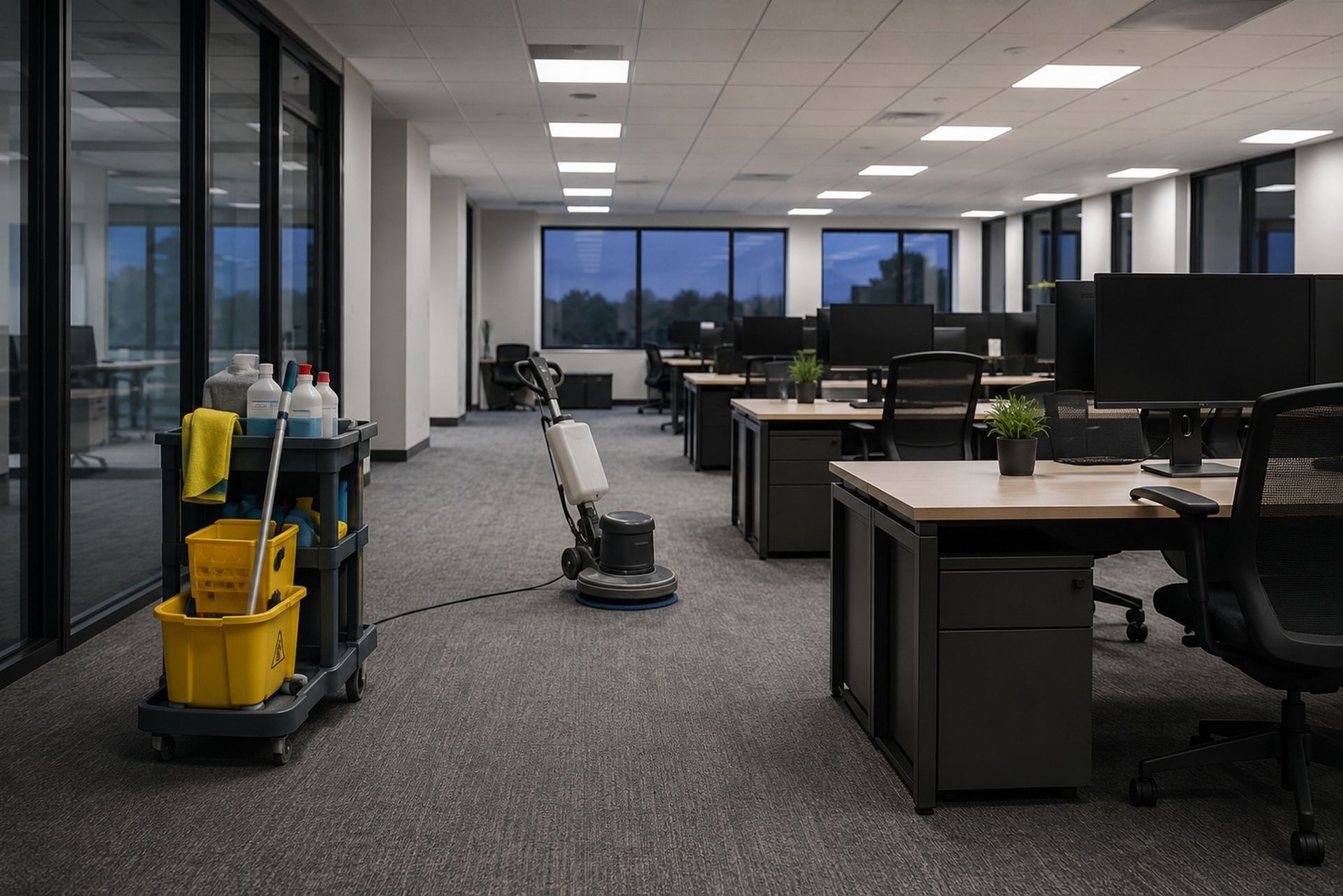
floor stripping job at a medical office in Allentown. On the way out, a buffer cord catches a server rack, pulling it from the wall. The damage bill: $14,000 in hardware, plus another $8,000 in lost patient data recovery. Without the right insurance, that single accident could wipe out a small cleaning company's entire quarterly profit. Situations like this aren't hypothetical for
Pennsylvania commercial cleaning contractors; insurance is what keeps a bad night from becoming a business-ending event. Whether you run a solo operation or manage crews across Philadelphia and Pittsburgh, understanding your coverage options is the difference between growing your company and gambling with it. This guide breaks down the policies you need, the ones you should consider, and the factors that shape what you'll pay.
Core Insurance Requirements for PA Cleaning Businesses
Pennsylvania doesn't require a statewide janitorial license, but that doesn't mean you can operate without protection. Most commercial clients, property managers, and government contracts demand proof of insurance before you set foot on their property. The state does enforce specific rules around workers' compensation and auto coverage, and cities like Philadelphia layer on their own requirements, including a Commercial Activity License for businesses operating within city limits.
Your insurance stack typically starts with three foundational policies. Getting these right protects you from the claims that hit cleaning contractors most often: slip-and-fall injuries, property damage, vehicle accidents, and employee injuries on the job.
General Liability: The Industry Standard
General liability (GL) is the baseline policy every cleaning contractor needs. It covers third-party bodily injury and property damage, meaning if a client's employee slips on a freshly mopped floor or your crew damages a fixture, GL pays for the claim. Most Pennsylvania commercial clients require at least $1 million per occurrence and $2 million aggregate.
GL also covers advertising injury and completed operations, which means you're protected even after you leave a job site. A typical cleaning contractor in Pennsylvania can expect to pay between $400 and $1,200 annually for GL, depending on revenue, crew size, and the types of facilities you service. Medical offices and industrial sites carry higher premiums than standard office buildings because the risk profile is steeper.
Pennsylvania Workers' Compensation Laws
Pennsylvania law is clear: if you have even one employee, you must carry workers' compensation insurance. The penalties for non-compliance are stiff, including criminal charges classified as a felony of the third degree for intentional violations. Workers' comp covers medical expenses and lost wages when an employee is injured on the job.
Cleaning work involves repetitive motion, chemical exposure, and slip hazards, so claims are common. Your premium is calculated using your total payroll and a classification code specific to janitorial services. Pennsylvania's workers' compensation requirements apply to all employers regardless of business structure, so even LLCs and partnerships aren't exempt. Keeping your experience modification rate (EMR) low through safety training directly reduces what you pay each year.
Commercial Auto Insurance for Mobile Crews
If your crews drive company vehicles, or even personal vehicles used for business purposes, you need commercial auto insurance. Pennsylvania requires minimum liability limits of $15,000 per person and $30,000 per accident for bodily injury, plus $5,000 for property damage. Those state minimums are dangerously low for a business, though. Most contractors carry at least $500,000 in combined single-limit coverage.
Your policy should cover owned,
hired, and non-owned vehicles. The "non-owned" piece is critical if employees ever use their personal cars to pick up supplies or travel between job sites. A single accident with an uninsured personal vehicle could expose your business to a lawsuit that your personal auto policy won't touch.

By: Tyler Reitz
Managing Principal of Bowmans Insurance
Specialized Coverage for Janitorial Services
Beyond the foundational three, cleaning contractors face risks that generic business policies don't address. Two coverage types stand out as particularly relevant for this industry.
Janitorial Bonds and Employee Dishonesty
Your crews work inside clients' buildings, often after hours with no supervision. That access creates trust, and a janitorial bond backs that trust with a financial guarantee. If an employee steals from a client, the bond pays the claim.
Basic janitorial bonds for small crews in Pennsylvania start as low as $100, while high-security commercial contracts can require coverage costing up to $2,000 or more. The cost depends on your crew size, the value of items your employees can access, and your claims history. Many property managers and corporate clients won't sign a contract without a bond in place. An employee dishonesty policy works similarly but protects your own business assets rather than your clients' property. Having both creates a complete layer of theft protection. The insurance requirements for Pennsylvania cleaning and janitorial businesses often specify bonding as a contract prerequisite, especially for government and healthcare facilities.
Lost Key and Property Damage Extensions
Imagine your crew loses the master key to a 200-unit apartment complex. The cost to re-key every lock could run $15,000 or more. Lost key coverage, sometimes called "care, custody, and control" coverage, handles exactly this scenario. Standard GL policies exclude damage to property in your care, which means the equipment you're cleaning around and the keys you're holding aren't covered unless you add this extension.
Property damage extensions also cover situations where your chemicals stain a carpet, your equipment scratches hardwood, or a pressure washer damages exterior surfaces. These claims are common and expensive. Adding this coverage typically costs a few hundred dollars annually but can save you tens of thousands on a single claim.
Comparing Essential vs. Optional Coverage
Not every policy is mandatory, but skipping certain coverages is a calculated risk. Here's how the basics compare to a more complete protection package.
Comparison Table: Basic vs. Comprehensive Protection
| Coverage Type | Basic Package | Comprehensive Package |
|---|---|---|
| General Liability | $1M / $2M limits | $1M / $2M with umbrella to $5M |
| Workers' Compensation | State minimum | State minimum + employer's liability |
| Commercial Auto | $30K state minimum | $500K+ combined single limit |
| Janitorial Bond | Not included | $10K-$50K bond |
| Janitorial Bond | Not included | Included |
| Inland Marine (Equipment) | Not included | Covers buffers, extractors, tools |
| Cyber Liability | Not included | Covers client data breaches |
| Estimated Annual Cost | $1,200-$2,500 | $3,500-$7,000+ |
The basic package keeps you legal and covers the most common claims. The comprehensive package is what you need to win contracts with hospitals, universities, and corporate campuses. As commercial insurance trends in 2026 show rising premiums across most commercial lines, locking in coverage now can protect you from rate increases later.
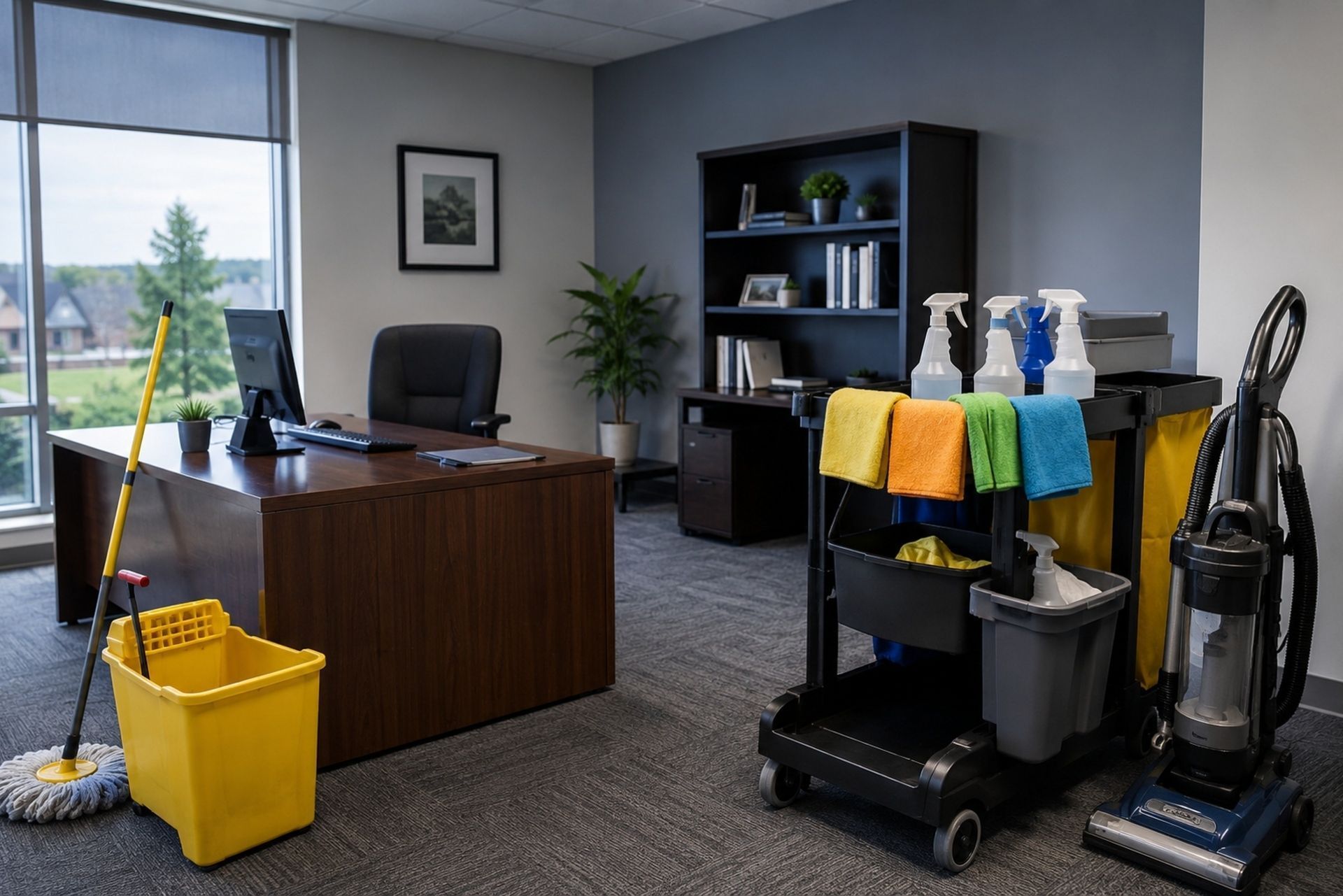
Two cleaning companies in the same city can pay wildly different premiums. Understanding what drives your costs helps you control them.
Service Locations and Client Types
Cleaning a single-story office park is a different risk profile than servicing a hospital or a high-rise in downtown Philadelphia. Insurers assess your client types carefully. Healthcare facilities, food processing plants, and industrial sites all carry elevated risk because of chemical exposure, biohazard contact, and expensive equipment on-site.
Geographic factors matter too. Urban areas with higher crime rates and more traffic accidents push premiums up. If you service clients in multiple Pennsylvania counties, your insurer may rate your policy based on the highest-risk location. The cleaning industry's shift toward specialized services in 2026 means contractors who handle disinfection, post-construction cleanup, or hazmat work should expect higher premiums than general office cleaners.
Annual Revenue and Payroll Size
Insurers use your annual revenue as a proxy for exposure. More revenue generally means more jobs, more client interactions, and more chances for something to go wrong. Your GL premium scales with revenue, while workers' comp scales with payroll.
A solo operator grossing $80,000 a year will pay far less than a company with 15 employees and $600,000 in revenue. One practical strategy: keep your payroll classifications accurate. If some employees only do administrative work, they shouldn't be classified under the janitorial code, which carries a higher rate. Misclassification is one of the most common reasons cleaning contractors overpay on workers' comp.
Common Questions About Cleaning Insurance
FAQ: Do I need insurance if I'm a solo contractor?
Yes. Even without employees, you still need general liability. Most clients require it before signing a contract, and a single property damage claim could cost you more than years of premiums. Workers' comp isn't required if you have no employees, but some clients may still ask for it.
FAQ: How do I show proof of insurance to a client?
Your insurer issues a Certificate of Insurance (COI) that lists your coverages, limits, and policy dates. You can request one at any time, and most insurers can generate it within 24 hours. Many clients ask to be listed as an "additional insured" on your policy, which is a standard request.
FAQ: Does general liability cover my vacuum and equipment?
No. GL covers damage you cause to other people's property, not your own. To protect your buffers, extractors, vacuums, and other tools, you need an inland marine policy or a business personal property endorsement.
FAQ: Can I get insurance for just one specific job?
Yes. Short-term or project-specific policies exist for contractors who need coverage for a single contract. These are common for one-time post-construction cleanups or event-based work. They cost more per day than annual policies but make sense if you don't need year-round coverage.
FAQ: What is the difference between being bonded and insured?
A bond is a guarantee to your client that you'll pay for specific losses, usually theft. Insurance protects you from claims and lawsuits. A bond protects your client; insurance protects your business. Most serious commercial clients require both.
Making the Right Choice for Your Cleaning Company
Picking the right insurance package isn't a one-time decision. Your coverage should evolve as your business grows, as you take on new client types, and as Pennsylvania's regulatory environment shifts. A company cleaning three office suites in Lancaster has different needs than one managing overnight crews across Philadelphia's hospital network.
Start with the non-negotiables: general liability, workers' comp if you have employees, and commercial auto if you use vehicles. Then evaluate your client contracts. Many will tell you exactly what coverage and limits they require. Build from there, adding bonds, lost key coverage, and inland marine as your operations demand.
Work with an agent who understands the cleaning industry specifically. Generic business insurance agents often miss the nuances of janitorial risk, like care-custody-and-control exclusions or the importance of proper payroll classification. The
2026 business insurance outlook suggests premiums will continue climbing across commercial lines, so reviewing your policies annually and shopping for competitive quotes isn't optional: it's how you protect your margins while keeping your business fully covered.
ABOUT THE AUTHOR:
TYLER REITZ, CIC, CPCU, ARM, AU
As Managing Principal of Bowmans Insurance, I’m passionate about helping businesses and individuals protect what matters most with clarity and confidence. With advanced designations including CIC, CPCU, ARM, and AU, I bring a comprehensive approach to risk management—ensuring every client receives strategic, reliable, and personalized coverage.
Contact Us
Why Work With Us?
Why Choose Bowman Insurance Group for Personal Insurance?


Choice and Transparency
Bowman Insurance Group works for you, not the insurance providers. We offer a wide selection of policies from reputable insurers, giving you options that suit your unique needs. We prioritize clarity and honesty, ensuring you understand each policy’s benefits and limitations.


Your Personal Advocate
Our team is committed to more than policy sales—we’re here to serve as your advocate. We balance your coverage needs with affordability, working to provide you with the best value without compromise. Every decision we support is made with your best interests in mind.


Expert Guidance for Life
Insurance can feel complex, but we’re here to make it simple. With years of experience, our advisors explain policies clearly and keep you informed of relevant changes. You’ll receive consistent support from trusted professionals who understand your needs and are dedicated to helping you make informed choices.
About Bowman's Insurance Group
Over 100 years Delivering Exceptional Service to Our Community
Personal Insurance Coverage in Pennsylvania
Personal Insurance Solutions in Pennsylvania
Home
Insurance
Auto
Insurance
Umbrella
Insurance
Condo
Insurance
Boat
Insurance
Motorcycle Insurance
RV
Insurance
ATV
Insurance
Insurance Client Reviews
Read our
customer reviews


40+
Insurance Partners
98%
Client Retention Rate
100
Years in Business
98%
Satisfaction Rate
Process of Working With A Personal Insurance Agent in Pennsylvania

Step 1: Initial Assessment
Our process begins with a comprehensive review of your personal insurance needs. We’ll assess factors like your lifestyle, family needs, and assets, so you get the coverage that best suits your unique situation.
Step 2: Customized Consultation
Meet with our knowledgeable agents one-on-one to discuss options tailored to your requirements. We aim to clarify your choices and recommend the most suitable coverage, considering both quality and affordability.
Step 3: Policy Selection & Activation
Once we identify the right coverage, we’ll handle the paperwork and activate your policy. Our team ensures a smooth, straightforward process, giving you confidence and peace of mind in your coverage.
Our Experts
Meet Our Team of Professional Insurance Experts
Tyler Reitz CIC, CPCU, ARM, AU
President
Carmen Donachy, CISR
Treasurer and Customer Service Rep
Brian Brassell, CSA, CRPC
Investment Advisor Representative, Director of Financial Services Division
Kassie Swope, CIC, CISR, AINS
Commercial Department Manager
Our News & Blogs
Latest insurance news & blogs