Pennsylvania Plastic Manufacturer Insurance

See How We're Different:
Call Us: 717-838-5464
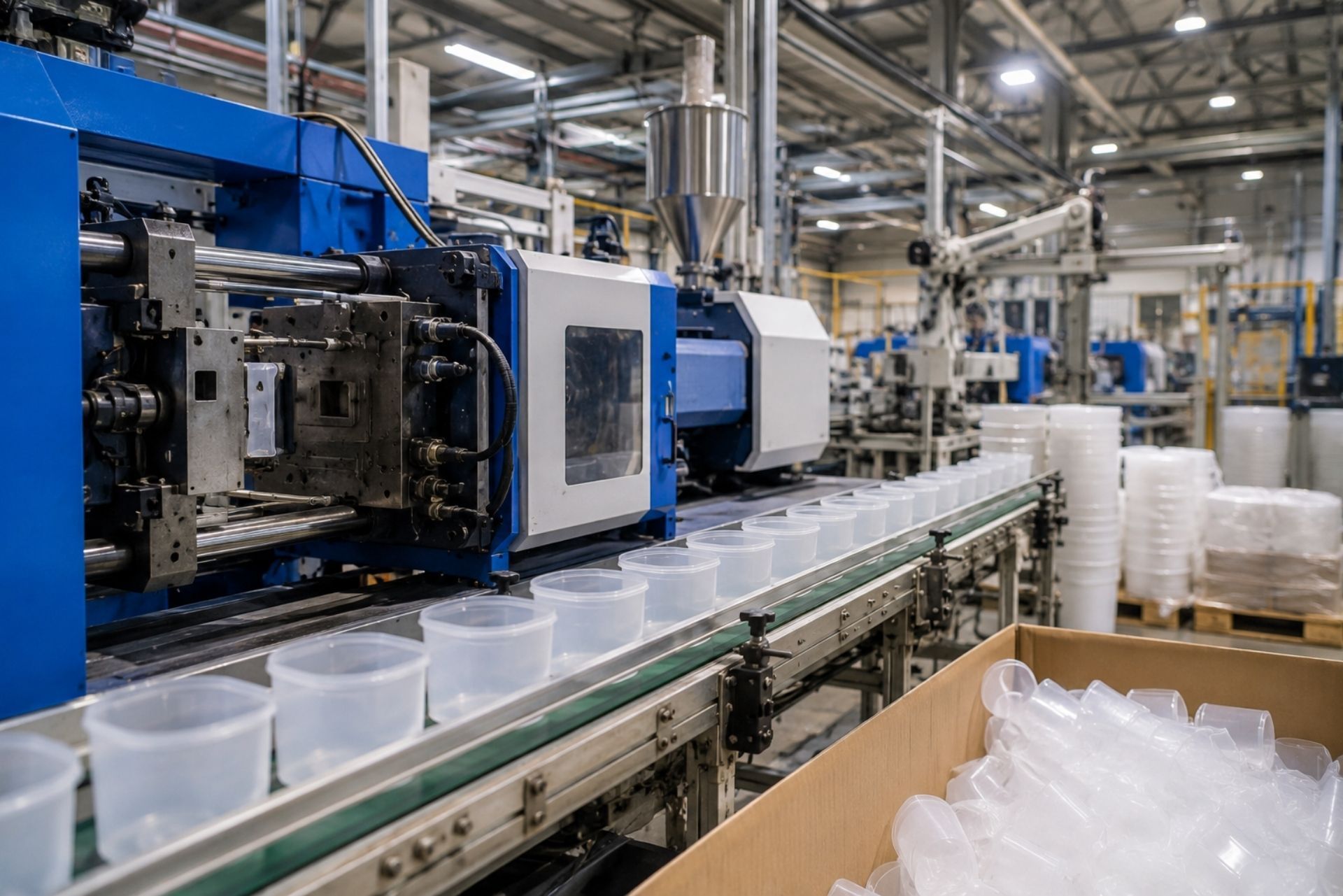
A plastics plant in Allentown runs three shifts of injection molding, each cycle pushing temperatures past 400°F while volatile resins fill the air. One misfire, one equipment failure, one contaminated batch shipped to an auto parts supplier, and the financial fallout can dwarf the cost of the raw materials on the floor. Pennsylvania's plastics sector supports over 56,000 jobs and
contributes roughly $4.7 billion in annual wages, making it one of the state's most significant manufacturing industries. That scale brings real exposure, from regulatory penalties to product recall costs that can stretch into seven figures. If you own or manage a plastic fabrication facility in the Commonwealth, understanding your insurance coverage isn't optional. It's the difference between surviving a major claim and shutting your doors. This Pennsylvania plastic manufacturing insurance coverage overview will walk you through the specific risks, required policies, and strategic decisions that protect your operation and your bottom line.
Risk Management for Pennsylvania Plastic Manufacturing
Plastic manufacturing sits at the intersection of heavy industry and precision engineering. Your facility likely handles thermoplastics, thermosets, or both, each with distinct hazard profiles that generic manufacturing policies often miss. Risk management starts before you ever talk to an underwriter. It starts on the production floor, in your chemical storage protocols, and in the compliance binders your safety team maintains.
The most common claims in this sector involve burns, chemical exposure, equipment malfunction, and defective product liability. A single workers' comp claim for a severe burn injury can cost $100,000 or more in medical expenses and lost wages. Product liability suits from a failed plastic component in a medical device or automotive assembly can reach millions. Your risk management framework needs to account for all of these possibilities, not just the ones that seem most likely.
Addressing High-Heat and Chemical Hazards
Extrusion lines, blow molding machines, and injection presses all operate at temperatures that can cause third-degree burns in seconds. The resins you process, whether ABS, polycarbonate, or PVC, release fumes that create respiratory and fire hazards. These aren't hypothetical risks. They're the reason your insurer wants to see documented ventilation testing, PPE compliance records, and fire suppression systems rated for chemical fires.
Facilities that store large quantities of resin pellets face dust explosion risks similar to grain elevators. Static discharge in a silo filled with fine plastic dust can trigger a deflagration event. Insurers increasingly require explosion-venting systems and regular housekeeping audits before they'll write coverage for these exposures. If your facility hasn't conducted a combustible dust hazard analysis in the past two years, expect your underwriter to flag it.
Navigating Pennsylvania State Compliance Standards
Pennsylvania's regulatory environment adds layers that manufacturers in other states don't face. The state Department of Environmental Protection enforces strict air quality permits for facilities emitting volatile organic compounds. Your Title V or State-Only operating permit directly affects your environmental liability exposure, and gaps in compliance can void certain policy provisions.
The Pennsylvania Insurance Department has been
expanding deregulation of certain property and casualty filings while tightening oversight on key commercial lines. This means your insurer may have more flexibility in pricing, but the state still mandates specific coverage minimums for workers' compensation and
commercial auto. Staying current with
department notices and regulatory updates is part of responsible risk management. Ignorance of a new filing requirement won't help you during a disputed claim.

By: Tyler Reitz
Managing Principal of Bowmans Insurance
Core Insurance Coverages for Plastic Fabricators
Every plastic manufacturer needs a foundation of policies that address the industry's unique exposures. A standard business owner's policy won't cut it. You need coverage designed for facilities that run high-temperature machinery, handle chemicals, and ship components into safety-critical supply chains.
Specialized manufacturing insurance programs bundle these coverages in ways that reduce gaps and often lower overall premiums compared to purchasing each policy separately. The key is understanding what each coverage does and where the exclusions hide.
General Liability and Product Liability Differences
General liability covers third-party bodily injury and property damage that occurs at your premises or because of your operations. If a delivery driver slips on your loading dock, that's a GL claim. Product liability is different. It covers claims arising from products you've manufactured after they leave your facility.
For plastic manufacturers, product liability is often the larger exposure. A batch of plastic housings that fails under heat stress in a consumer appliance can trigger a recall and a wave of injury claims. Your GL policy won't cover those losses. You need a dedicated product liability endorsement or standalone policy with limits that reflect your customer contracts. Many OEM buyers require $5 million or more in product liability coverage before they'll add you to their approved vendor list.
Equipment Breakdown and Specialized Machinery Insurance
Standard property insurance covers fire, theft, and weather damage. It doesn't cover mechanical or electrical breakdown of your equipment. A hydraulic press that suffers an internal failure, a PLC controller that shorts out, or a chiller system that fails mid-cycle: these losses fall under equipment breakdown coverage.
A single injection molding machine can cost $250,000 to $1.5 million to replace. The repair timeline might stretch eight to twelve weeks while you wait for parts from overseas. Equipment breakdown insurance covers the repair or replacement cost, and when paired with business interruption coverage, it also compensates for lost production income during the downtime. If your facility relies on specialized or custom-built machinery, make sure your policy values reflect current replacement costs, not the depreciated book value.
Workers' Compensation for Shop Floor Safety
Pennsylvania requires workers' compensation coverage for nearly all employers. The state waived Workers' Compensation Security Fund contributions for 2026, which provides some premium relief this year. That said, plastics manufacturing carries elevated classification codes due to the heat, chemical, and machinery hazards involved.
Your experience modification rate, or EMR, directly controls your workers' comp premium. An EMR above 1.0 means you're paying more than the industry average. Facilities with strong safety programs, documented training, and low claim histories can push their EMR below 1.0 and save tens of thousands annually. Investing in machine guarding, lockout/tagout procedures, and ergonomic assessments pays for itself through lower premiums over time.
Comparing Essential vs. Enhanced Protection
Not every facility needs the same level of coverage. A small custom molder running one shift with ten employees has different exposures than a multi-line extruder shipping nationally. The table below breaks down what a basic package includes versus a comprehensive program.
Comparison Table: Basic vs. Comprehensive Manufacturer Coverage
| Coverage Area | Basic Package | Comprehensive Package |
|---|---|---|
| General Liability | $1M per occurrence / $2M aggregate | $2M per occurrence / $5M aggregate |
| Product Liability | Included in GL limits | Standalone policy, $5M+ limits |
| Property Insurance | Building and contents, named perils | All-risk with equipment breakdown |
| Workers' Compensation | State minimum compliance | Enhanced return-to-work programs |
| Business Interruption | Not included | 12-month coverage with supply chain extension |
| Inland Marine | Not included | Coverage for goods in transit |
| Umbrella/Excess | Not included | $5M-$10M excess liability |
| Environmental Liability | Not included | Pollution legal liability, cleanup costs |
| Cyber Liability | Not included | Coverage for SCADA/ICS system breaches |
Facilities with annual revenues under $2 million might start with the basic package and add endorsements as they grow. Larger operations, especially those supplying automotive, aerospace, or medical markets, typically need the comprehensive approach from day one. Manufacturing insurance premiums
typically range from $7,500 to over $30,000 annually depending on revenue, payroll, and claim history.
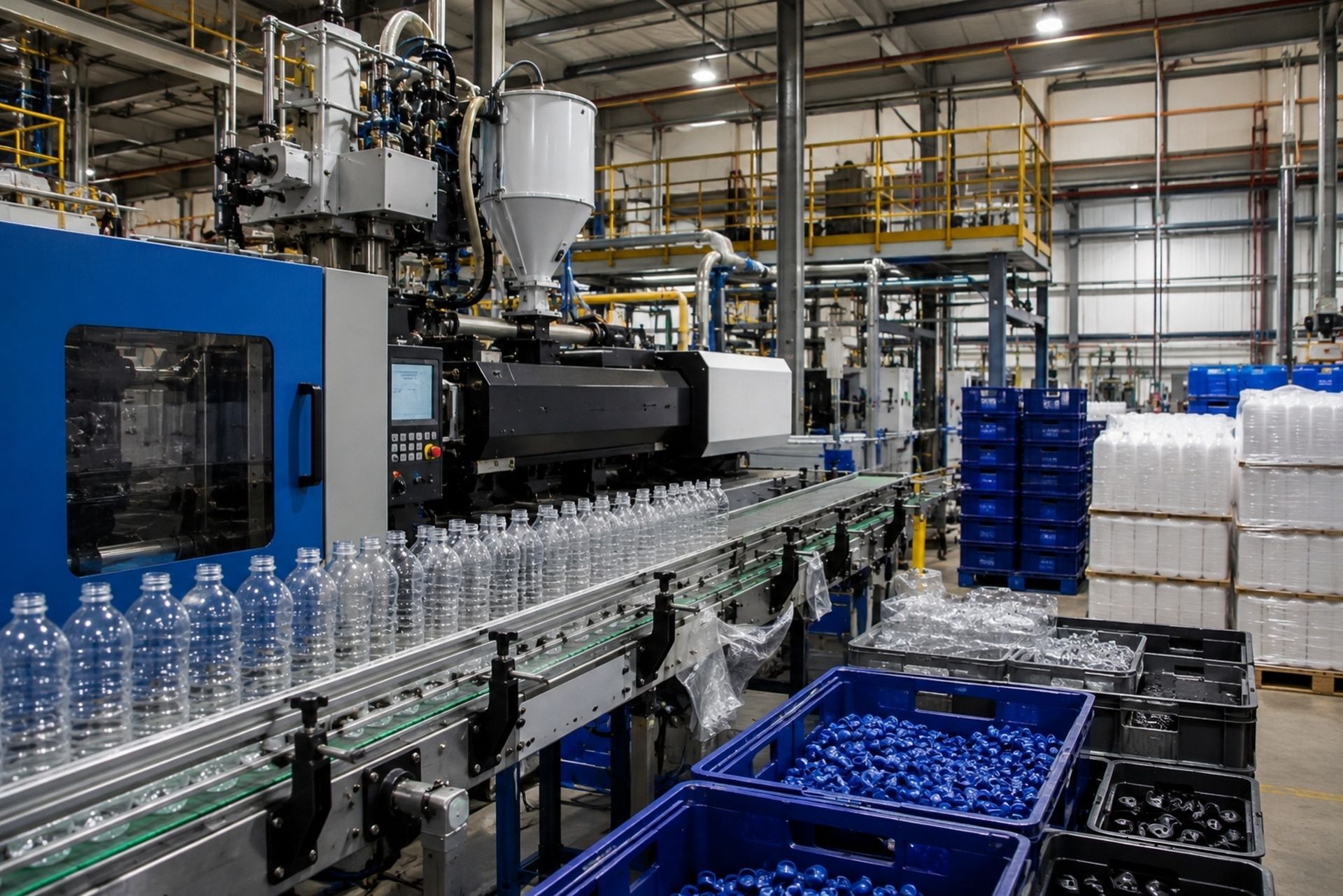
Protecting the Supply Chain and Business Continuity
A fire at your facility is an obvious disaster. But what about a key resin supplier going offline for three months? Or a trucking company losing a shipment of finished parts worth $200,000? Supply chain disruptions hit plastic manufacturers hard because production schedules are tight and customers don't wait.
Business Interruption for Production Delays
Business interruption insurance replaces lost income and covers continuing expenses when a covered event shuts down your production. The key phrase is "covered event." Standard BI policies only trigger when physical damage to your property causes the shutdown. If you want coverage for supplier failures or utility outages that don't damage your building, you need contingent business interruption or utility services endorsements.
Calculate your BI coverage limit by estimating your gross earnings over the maximum plausible downtime period. Most manufacturers underestimate this figure. A twelve-week shutdown doesn't just cost you twelve weeks of revenue. It costs you the customers who find alternative suppliers and don't come back. Work with your agent to model realistic scenarios based on your most vulnerable equipment and supply relationships.
Inland Marine for Transporting Finished Goods
Once your products leave the loading dock, your property insurance stops covering them. Inland marine insurance fills that gap, protecting goods in transit by truck, rail, or air. For plastic manufacturers shipping finished components to assembly plants across the mid-Atlantic or nationwide, this coverage prevents a total loss when a trailer is stolen, damaged in an accident, or destroyed in a warehouse fire at a distribution center.
Inland marine policies can be written on a blanket basis covering all shipments or on a per-shipment basis for high-value loads. If you're shipping custom-molded parts worth $50,000 per pallet, the per-shipment approach gives you more precise protection. Your freight contracts may shift liability to the carrier in some cases, but carrier liability limits are often capped at $0.50 per pound, which won't come close to covering precision plastic components.
Common Questions About Plastic Manufacturing Insurance
FAQ: Cost, Requirements, and Claims
How much does insurance cost for a Pennsylvania plastic manufacturer? Premiums vary widely based on revenue, payroll, equipment values, and claims history. A mid-sized facility with $5 million in revenue might pay $15,000 to $25,000 annually for a comprehensive package. General liability alone in Pennsylvania averages around $500 to $1,500 per year for small businesses, but manufacturing operations pay significantly more.
Is product liability insurance required by law? Pennsylvania doesn't mandate product liability insurance by statute. Your customers almost certainly do, though. Most OEM contracts require proof of product liability coverage with minimum limits of $1 million to $5 million before they'll issue a purchase order.
What's the most common claim for plastic manufacturers? Workers' compensation claims from burns, repetitive motion injuries, and chemical exposure lead the list. Product liability claims are less frequent but far more expensive per incident.
Does my policy cover mold and die damage? Standard property policies often exclude molds, dies, and tooling owned by customers. You'll need a specific endorsement or a separate tool and die floater to cover these assets, especially if customer-owned molds are stored at your facility.
How do I lower my insurance premiums? Reduce your EMR through documented safety programs, invest in fire suppression and ventilation systems, maintain clean loss runs, and bundle coverages with a single carrier. Working with a broker who
specializes in manufacturing insurance can also uncover credits you're missing.
Making the Right Choice for Your Facility
Your insurance program should match the specific risks your facility faces, not a generic template pulled from a shelf. A thermoforming shop in Erie has different exposures than a compounding operation in Philadelphia, and your coverage should reflect that.
Start by auditing your current policies against the coverage areas outlined above. Pay special attention to equipment breakdown, product liability limits, and business interruption adequacy. These three areas account for the largest uninsured losses in the plastics sector. Review your EMR and invest in the safety improvements that will bring it down.
Pennsylvania's plastics industry continues to strengthen, with regional initiatives
focused on growing the sector's economic footprint across the Commonwealth. As your operation grows, your insurance needs will evolve with it. Schedule an annual policy review with a broker who understands plastics manufacturing, not just manufacturing in general. The right coverage protects your equipment, your employees, your customers, and the business you've spent years building.
ABOUT THE AUTHOR:
TYLER REITZ, CIC, CPCU, ARM, AU
As Managing Principal of Bowmans Insurance, I’m passionate about helping businesses and individuals protect what matters most with clarity and confidence. With advanced designations including CIC, CPCU, ARM, and AU, I bring a comprehensive approach to risk management—ensuring every client receives strategic, reliable, and personalized coverage.
Contact Us
Why Work With Us?
Why Choose Bowman Insurance Group for Personal Insurance?


Choice and Transparency
Bowman Insurance Group works for you, not the insurance providers. We offer a wide selection of policies from reputable insurers, giving you options that suit your unique needs. We prioritize clarity and honesty, ensuring you understand each policy’s benefits and limitations.


Your Personal Advocate
Our team is committed to more than policy sales—we’re here to serve as your advocate. We balance your coverage needs with affordability, working to provide you with the best value without compromise. Every decision we support is made with your best interests in mind.


Expert Guidance for Life
Insurance can feel complex, but we’re here to make it simple. With years of experience, our advisors explain policies clearly and keep you informed of relevant changes. You’ll receive consistent support from trusted professionals who understand your needs and are dedicated to helping you make informed choices.
About Bowman's Insurance Group
Over 100 years Delivering Exceptional Service to Our Community
Personal Insurance Coverage in Pennsylvania
Personal Insurance Solutions in Pennsylvania
Home
Insurance
Auto
Insurance
Umbrella
Insurance
Condo
Insurance
Boat
Insurance
Motorcycle Insurance
RV
Insurance
ATV
Insurance
Insurance Client Reviews
Read our
customer reviews


40+
Insurance Partners
98%
Client Retention Rate
100
Years in Business
98%
Satisfaction Rate
Process of Working With A Personal Insurance Agent in Pennsylvania

Step 1: Initial Assessment
Our process begins with a comprehensive review of your personal insurance needs. We’ll assess factors like your lifestyle, family needs, and assets, so you get the coverage that best suits your unique situation.
Step 2: Customized Consultation
Meet with our knowledgeable agents one-on-one to discuss options tailored to your requirements. We aim to clarify your choices and recommend the most suitable coverage, considering both quality and affordability.
Step 3: Policy Selection & Activation
Once we identify the right coverage, we’ll handle the paperwork and activate your policy. Our team ensures a smooth, straightforward process, giving you confidence and peace of mind in your coverage.
Our Experts
Meet Our Team of Professional Insurance Experts
Tyler Reitz CIC, CPCU, ARM, AU
President
Carmen Donachy, CISR
Treasurer and Customer Service Rep
Brian Brassell, CSA, CRPC
Investment Advisor Representative, Director of Financial Services Division
Kassie Swope, CIC, CISR, AINS
Commercial Department Manager
Our News & Blogs
Latest insurance news & blogs