Pennsylvania
Steel Building Manufacturer Insurance

See How We're Different:
Call Us: 717-838-5464
A fabrication shop in Allentown loses a $1.2 million structural steel order when a crane cable snaps, sending 40-foot I-beams crashing into a finished inventory rack. The property damage alone tops $380,000, but the real financial hit comes from the product delay claims filed by the general contractor waiting on those beams. Without the right insurance structure, that single afternoon could bankrupt a mid-size manufacturer.
Pennsylvania's steel building industry faces a unique collision of heavy industrial risk, strict state regulations, and an insurance market that's tightening fast. The Pennsylvania Insurance Department recently blocked $227.9 million in proposed property and casualty premium increases during its most recent review cycle, a move that signals both regulatory vigilance and upward pressure on carrier pricing. If you're running a steel fabrication or manufacturing operation in the state, understanding your insurance coverage isn't optional. It's a survival skill.
This guide breaks down the specific policies, state requirements, and coverage strategies that Pennsylvania steel building manufacturers need to protect their operations, their workers, and their bottom line.
Risk Management for Pennsylvania Steel Fabricators
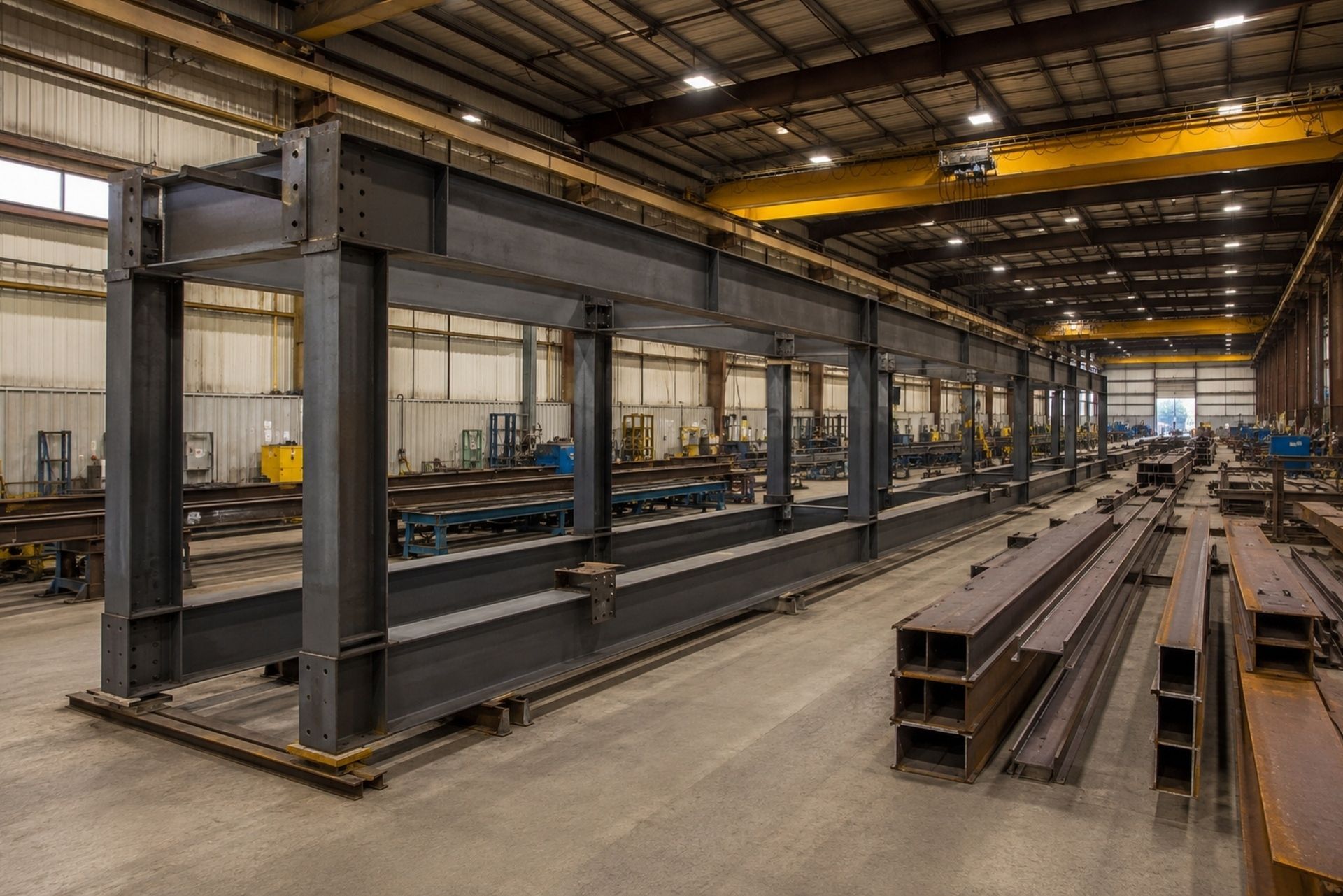
Steel fabrication plants operate in one of the highest-risk manufacturing environments in the country. The combination of heavy materials, extreme heat, complex machinery, and tight production schedules creates a risk profile that generic commercial insurance simply can't address. Effective risk management starts with identifying the hazards specific to your operation and then building a coverage strategy around them.
Common Hazards in Metal Manufacturing
Every steel building manufacturer deals with a core set of dangers that drive both injury rates and insurance premiums. Welding operations produce arc flash burns and fume inhalation risks. Overhead cranes and rigging equipment create crush and drop hazards. CNC plasma cutters and press brakes cause lacerations and amputations when safety protocols fail.
Beyond worker injuries, product-related risks are just as serious. A miscalculated weld on a load-bearing connection can lead to structural failure months after delivery. Defective coatings can accelerate corrosion, triggering warranty claims or worse. These risks don't just affect your shop floor; they follow your products to job sites across multiple states.
Fire is another constant concern. Hot work permits, flammable coatings, and metal dust accumulation make steel plants prime candidates for catastrophic fire losses. Your insurer will want to see documented fire prevention protocols, and your premiums will reflect whether those protocols actually exist.
State-Specific Liability Requirements
Pennsylvania imposes several requirements that directly affect how steel manufacturers structure their insurance. The state follows a modified comparative negligence standard, meaning your company can be held liable for damages as long as your share of fault doesn't exceed 50%. This matters enormously in product liability cases where multiple parties contributed to a failure.
The Pennsylvania Supreme Court has clarified bad faith exposure standards for sureties and insurers, reinforcing that carriers who unreasonably deny or delay claims face statutory penalties. For manufacturers, this means your insurer's claims-handling reputation matters as much as the policy language itself.
If you're bidding on public projects, Pennsylvania's Public Works Contractors' Bond Law requires performance and payment bonds on contracts exceeding $10,000. Steel building manufacturers who serve as
prime contractors on government work need bonding capacity in addition to their standard insurance program.

By: Tyler Reitz
Managing Principal of Bowmans Insurance
Core Coverage Categories for Steel Building Plants
Building a proper insurance program for a steel manufacturing facility requires layering multiple policies together. No single policy covers every exposure, and gaps between policies are where the most expensive claims hide.
General Liability and Product Liability
General liability (GL) covers third-party bodily injury and property damage claims arising from your operations. If a visitor trips over steel stock in your yard or a delivery driver is struck by a forklift, GL responds. Most steel manufacturers need GL limits of at least $1 million per occurrence with a $2 million aggregate.
Product liability is where things get expensive. Your completed operations exposure extends for years after a building component leaves your shop. A Pennsylvania court recently held that certain insurance coverage disputes require careful analysis of policy exclusions, which means vague or poorly worded product liability endorsements can leave you exposed. Make sure your policy explicitly covers structural steel components, connection hardware, and any coatings or finishes you apply.
One common mistake: assuming your GL policy automatically includes adequate product liability limits. Many standard policies sub-limit completed operations coverage. Ask your broker to confirm that your product liability limits match your GL limits dollar for dollar.
Commercial Property and Equipment Breakdown
Your facility itself represents a massive investment. Commercial property insurance covers your building, raw steel inventory, finished goods, and office contents against fire, wind, theft, and other covered perils. For most steel plants, replacement cost coverage is essential because depreciated values on specialized equipment rarely reflect what you'd actually pay to replace it.
Equipment breakdown coverage (sometimes called boiler and machinery insurance) fills a critical gap. Standard property policies exclude mechanical and electrical breakdown. When your $400,000 CNC beam line goes down due to an electrical surge or motor failure, equipment breakdown coverage pays for repairs and lost production income. Manufacturing insurance costs in 2026 reflect the rising replacement value of specialized fabrication equipment, so review your equipment schedules annually.
Business interruption coverage deserves special attention. A major fire or equipment failure can shut your plant for months. Your policy should cover lost revenue, continuing expenses, and the extra costs of temporary operations during the rebuild period.
Workers' Compensation in PA
Pennsylvania requires workers' compensation coverage for virtually all employees, with very few exceptions. Steel manufacturing carries some of the highest workers' comp classification rates in the state due to the inherent danger of the work.
Benefits for injured workers in Pennsylvania are calculated based on the statewide average weekly wage, and the 2026 maximum weekly compensation rate reflects updated benefit schedules published by the state. For a steel fabrication shop with 30 employees, annual workers' comp premiums can easily run $150,000 to $300,000 depending on your experience modification rate.
Your experience mod is the single biggest lever you have for controlling workers' comp costs. A mod below 1.0 earns you premium credits; above 1.0 means surcharges. Investing in safety training, return-to-work programs, and proper PPE doesn't just prevent injuries. It directly reduces your insurance spend. Pennsylvania's
historical workers' compensation rate schedules show how classification rates have shifted over time, and steel manufacturing has consistently ranked among the costlier categories.
Comparing Standard vs. Specialized Steel Manufacturer Coverage
Not all manufacturing insurance policies are created equal. A standard business owner's policy (BOP) designed for light commercial operations will leave a steel fabricator dangerously underinsured. Here's how standard and specialized coverage compare.
Coverage Comparison Table
| Coverage Feature | Standard Commercial Policy | Specialized Steel Manufacturer Policy |
|---|---|---|
| Product Liability | Sub-limited or excluded for structural components | Full limits for fabricated steel products |
| Equipment Breakdown | Often excluded | Included with production equipment schedules |
| Crane & Rigging | Not covered | Covered with sub-limits for owned equipment |
| Pollution Liability | Excluded | Available for welding fumes, coating chemicals |
| Transit Coverage | Basic, low limits | Inland marine with full replacement cost |
| Installation Coverage | Not available | Installation floater included |
| Business Interruption | 30-day waiting period typical | Customizable waiting period, extended coverage |
| Recall Expense | Not covered | Available as endorsement |
The price difference between standard and specialized coverage is real, but it's a fraction of what a single uncovered claim would cost. A
specialized manufacturer insurance program accounts for the specific exposures that generic policies miss entirely.
Protecting Assets During Transit and Installation
Steel components are most vulnerable between the time they leave your shop and the moment they're bolted into place. Standard property and liability policies typically don't cover this gap, which is why transit and installation coverage is essential for any manufacturer that ships or installs its own products.
Inland Marine Insurance for Steel Components
Inland marine insurance covers goods in transit over land. For steel building manufacturers, this means your fabricated beams, columns, joists, and panels are protected while on trucks, at staging areas, and at delivery points. A single truckload of structural steel can be worth $80,000 to $200,000, and a highway accident or load shift can destroy an entire shipment.
Your inland marine policy should cover owned goods on your own trucks, goods on common carriers, and materials stored temporarily at job sites before installation begins. Pay attention to the valuation method: you want replacement cost or selling price coverage, not depreciated value.
Installation Floaters for On-Site Assembly
If your crews erect the buildings you fabricate, you need an installation floater. This policy covers your materials and labor during the assembly process, protecting against damage from weather, theft, vandalism, and accidents during construction.
The floater should run from the moment materials arrive on site through final completion and acceptance. Some policies also cover testing and commissioning periods. Without this coverage, a windstorm that topples a partially erected steel frame could leave you absorbing six figures in material and labor losses with no insurance recovery.
The
2026 construction insurance market outlook shows carriers tightening terms on installation coverage, particularly for projects in coastal or high-wind zones. If you're erecting buildings in eastern Pennsylvania, expect underwriters to ask detailed questions about your wind bracing and temporary stabilization procedures.
Common Questions About Steel Manufacturing Insurance
FAQs: What Pennsylvania Business Owners Ask
Do I need separate product liability coverage, or does my general liability policy cover it? Most GL policies include some product liability, but the limits and exclusions may not be adequate for structural steel. Ask your broker to confirm that completed operations coverage matches your GL limits and explicitly covers fabricated building components.
How is my workers' comp premium calculated? Your premium is based on your payroll, your classification code rate, and your experience modification factor. Steel fabrication classification codes carry higher base rates than most manufacturing categories. Your workers' compensation costs depend on your claims history and safety record.
What's the difference between inland marine and cargo insurance? Inland marine covers goods you own while in transit or at temporary locations. Cargo insurance typically covers a carrier's liability for goods they're transporting. If you ship on your own trucks, you need inland marine. If you use third-party carriers, verify their cargo coverage and consider excess coverage for high-value loads.
Does my property policy cover my raw steel inventory? Yes, but check the valuation method and any sub-limits for outdoor storage. Steel stored in yards is exposed to theft and weather damage, and some policies cap outdoor storage coverage at a fraction of your total property limit.
Should I carry umbrella or excess liability coverage? For most steel building manufacturers, yes. A serious structural failure or workplace fatality can generate claims well beyond your primary policy limits. Umbrella policies typically start at $1 million and can extend to $10 million or more.
Are pollution claims covered under my standard GL policy? Almost never. Standard GL policies contain absolute pollution exclusions. If your operations involve welding fumes, galvanizing chemicals, or coating solvents, you need a separate pollution liability policy or a specific endorsement.
Making the Right Choice for Your Facility
Choosing the right insurance program for a Pennsylvania steel building manufacturer isn't about finding the cheapest premium. It's about matching your coverage to your actual risk profile, from the raw materials sitting in your yard to the finished buildings standing across the mid-Atlantic.
Start by auditing your current policies against the coverage categories outlined in this steel manufacturer insurance coverage guide. Look for gaps in product liability, equipment breakdown, transit, and installation. Review your workers' comp experience mod and identify safety investments that could lower it.
Work with a broker who understands heavy manufacturing, not a generalist who writes restaurant and retail policies. A specialized broker knows which carriers have appetite for steel fabrication risks and can negotiate terms that reflect your safety record and operational controls.
Review your program annually, especially as the 2026 insurance market continues to shift with carriers adjusting capacity and pricing across manufacturing classes. Your operation changes year to year: new equipment, new contracts, new job sites. Your insurance should change with it.
The manufacturers who avoid catastrophic uninsured losses aren't lucky. They're prepared. Make sure your coverage reflects the real risks inside your plant and on every job site where your steel stands.
ABOUT THE AUTHOR:
TYLER REITZ, CIC, CPCU, ARM, AU
As Managing Principal of Bowmans Insurance, I’m passionate about helping businesses and individuals protect what matters most with clarity and confidence. With advanced designations including CIC, CPCU, ARM, and AU, I bring a comprehensive approach to risk management—ensuring every client receives strategic, reliable, and personalized coverage.
Contact Us
Why Work With Us?
Why Choose Bowman Insurance Group for Personal Insurance?


Choice and Transparency
Bowman Insurance Group works for you, not the insurance providers. We offer a wide selection of policies from reputable insurers, giving you options that suit your unique needs. We prioritize clarity and honesty, ensuring you understand each policy’s benefits and limitations.


Your Personal Advocate
Our team is committed to more than policy sales—we’re here to serve as your advocate. We balance your coverage needs with affordability, working to provide you with the best value without compromise. Every decision we support is made with your best interests in mind.


Expert Guidance for Life
Insurance can feel complex, but we’re here to make it simple. With years of experience, our advisors explain policies clearly and keep you informed of relevant changes. You’ll receive consistent support from trusted professionals who understand your needs and are dedicated to helping you make informed choices.
About Bowman's Insurance Group
Over 100 years Delivering Exceptional Service to Our Community
Personal Insurance Coverage in Pennsylvania
Personal Insurance Solutions in Pennsylvania
Home
Insurance
Auto
Insurance
Umbrella
Insurance
Condo
Insurance
Boat
Insurance
Motorcycle Insurance
RV
Insurance
ATV
Insurance
Insurance Client Reviews
Read our
customer reviews


40+
Insurance Partners
98%
Client Retention Rate
100
Years in Business
98%
Satisfaction Rate
Process of Working With A Personal Insurance Agent in Pennsylvania

Step 1: Initial Assessment
Our process begins with a comprehensive review of your personal insurance needs. We’ll assess factors like your lifestyle, family needs, and assets, so you get the coverage that best suits your unique situation.
Step 2: Customized Consultation
Meet with our knowledgeable agents one-on-one to discuss options tailored to your requirements. We aim to clarify your choices and recommend the most suitable coverage, considering both quality and affordability.
Step 3: Policy Selection & Activation
Once we identify the right coverage, we’ll handle the paperwork and activate your policy. Our team ensures a smooth, straightforward process, giving you confidence and peace of mind in your coverage.
Our Experts
Meet Our Team of Professional Insurance Experts
Tyler Reitz CIC, CPCU, ARM, AU
President
Carmen Donachy, CISR
Treasurer and Customer Service Rep
Brian Brassell, CSA, CRPC
Investment Advisor Representative, Director of Financial Services Division
Kassie Swope, CIC, CISR, AINS
Commercial Department Manager
Our News & Blogs
Latest insurance news & blogs