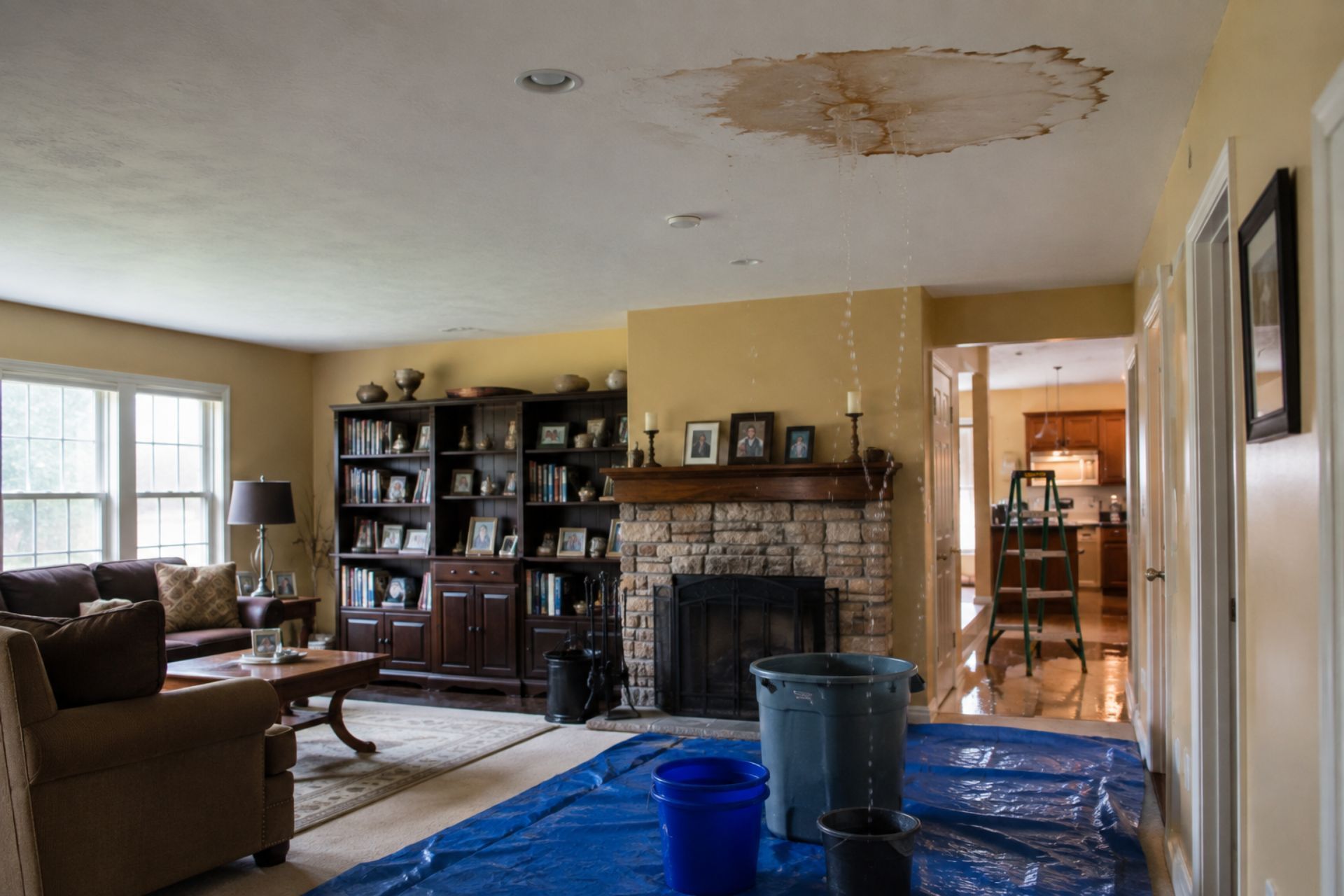

A roofer in Manheim Township finishes a tear-off, rolls up the tarps, and heads home. That night a storm pushes water through a seam he missed, and the homeowner's hardwood floors, drywall, and furniture are ruined. By Monday morning he's facing a five-figure property damage claim. The only question that matters now is whether his policy will actually pay it.
Most contractors in Lancaster County don't find out what their insurance covers until something goes wrong. By then, it's too late to fix a gap.
This guide covers contractor insurance in Lancaster, PA, from general liability and tools coverage to commercial auto, workers' compensation, bonds, and certificates. It's written for the plumbers, electricians, HVAC techs, remodelers, and general contractors working everywhere from downtown Lancaster to Ephrata, Lititz, and Strasburg.
You'll learn what each policy does and where the common gaps hide. You'll also see what your clients, general contractors, and local municipalities will ask you to prove before you start work. The goal is simple: buy the right coverage once, instead of finding out the hard way that you bought the wrong coverage.
Protecting Your Contracting Business in Lancaster County
Lancaster County is a busy place to build. You've got historic rowhomes in the city, sprawling new developments in the suburbs, agricultural buildings out toward the townships, and steady commercial work along the Route 30 corridor. Each of those job types carries different risks, and each client expects different proof that you're covered.
The city adds its own layer. Master Plumbers must be licensed by the City of Lancaster to perform work within city limits, which is separate from what a surrounding township may require. Contractors who split time between the city and places like East Hempfield or Lancaster Township often get tripped up by these differences.
State rules matter too. If you do residential remodeling, you're dealing with Pennsylvania's Home Improvement Consumer Protection Act and its registration requirements. The Home Improvement Contractor registration fee rose to $100 every two years in 2026, and the Attorney General's office launched a new online registration system on April 24, 2026. Registration asks you to confirm you carry liability insurance, so your policy is part of staying legal, not just staying protected.
Here's what that means for you: insurance isn't one decision. It's a set of policies that fit together, and the way they fit should match the work you actually do.


By: Tyler Reitz
Managing Principal of Bowmans Insurance
Core Insurance Policies for Pennsylvania Contractors
Three policies form the backbone of nearly every contractor's program in Pennsylvania. Some are legally required, some are contractually required, and all of them get tested when a claim lands.
General Liability: The Foundation of Your Coverage
General liability covers third-party bodily injury and property damage caused by your work or your operations. If a homeowner trips over your extension cord, or your crew cracks a client's granite countertop, this is the policy that responds. It also typically covers completed operations, meaning damage that shows up after you've finished the job.
The catch is what it won't cover. Most contractors don't realize that general liability excludes damage to your own work. If a tile installer lays a bathroom floor incorrectly, the policy usually won't pay to redo the tile. It may pay for the water damage to the ceiling below if a failed seal leaks. That distinction, often called the "your work" exclusion, is behind a lot of denied claims and frustrated phone calls.
A few other things to check on any GL quote:
- Per-occurrence and aggregate limits: Many commercial contracts ask for higher limits than a basic policy provides.
- Subcontractor exclusions: Some policies exclude claims caused by uninsured subs. If you hire out work, read this carefully.
- Residential or roofing exclusions: Some carriers restrict certain work types or limit coverage for specific trades.
- Additional insured endorsements: GCs and property owners will often require these before you set foot on site.
Workers' Compensation Requirements in Pennsylvania
Pennsylvania requires most employers to carry workers' compensation, and that includes small contracting crews. If you have even one employee, you should assume you need it. Sole proprietors without employees may be exempt, but many general contractors won't let you on a job without proof of coverage anyway.
Workers' comp pays medical bills and lost wages for employees hurt on the job. Benefits are tied to the state wage figures, and for injuries on or after January 1, 2026, the Statewide Average Weekly Wage is set at $1,394.00 per week. That number affects the maximum wage benefit an injured worker can receive.
There's some good news on cost. Pennsylvania approved a 1.22% decrease in workers' compensation loss costs effective April 1, 2026. That said, loss costs aren't your final premium. Carriers apply their own multipliers, which commonly run 20% to 50% on top, so your actual rate depends heavily on which carrier you're with.
One misconception we see constantly: contractors who call their workers "1099 subs" to avoid comp. If those workers use your tools, follow your schedule, and work only for you, Pennsylvania may treat them as employees. An audit or an injury claim can expose this fast, and the back premium plus penalties hurts.
Commercial Auto Insurance for Work Trucks and Vans
Your personal auto policy almost certainly won't cover a truck used mainly for business. If your F-250 is titled to your LLC, hauls a trailer, or carries signage and equipment, you need a commercial auto policy.
Pennsylvania's legal minimum for commercial auto is 15/30/5. That's $15,000 per person and $30,000 per accident for bodily injury, plus $5,000 for property damage. Those numbers are low. Rear-end a new pickup on Route 222 and $5,000 in property damage coverage might not cover the bumper and sensors.
Most commercial clients and GCs will ask for much higher limits. Also ask about hired and non-owned auto coverage. If an employee runs to the supply house in their own car and causes an accident, you can be named in the lawsuit, and this coverage protects the business.
Safeguarding Assets: Tools, Equipment, and Inland Marine
Here's a war story that repeats every year. An electrician leaves a van parked overnight outside a jobsite in the city. Someone breaks the window and walks off with drills, a fish tape, testers, and a box of copper. He calls his agent expecting the claim to be covered, only to learn that neither his general liability nor his commercial auto policy covers tools stolen from the vehicle.
Tools and equipment coverage, usually written as an inland marine policy, fills that gap. It covers your gear wherever it goes: in the truck, on the jobsite, or in a storage trailer. General liability covers damage you cause to other people's property, not your own, and commercial auto covers the vehicle, not the contents.
What to look for in a tools policy:
- Scheduled vs. unscheduled items: Big-ticket equipment like skid steers, excavators, or laser levels are often listed individually. Hand tools are usually covered under a blanket limit.
- Per-item limits: Some unscheduled coverage caps how much any single tool can pay out. Check this if you own expensive specialty gear.
- Replacement cost vs. actual cash value: ACV pays what a used tool is worth today. Replacement cost pays to buy new. The difference on a five-year-old tool collection is significant.
- Theft conditions: Some policies require tools to be locked in a vehicle or secured on site, with visible signs of forced entry.
- Rented and leased equipment: If you rent a mini-excavator for a foundation job, confirm whether your policy covers it or whether you need the rental company's damage waiver.
For HVAC and plumbing contractors carrying refrigerant recovery machines, press tools, and camera inspection rigs, the value adds up quickly. Take an inventory with photos and serial numbers now. It'll make any future claim go much faster.

Surety Bonds and Licensing in Lancaster Municipalities
Bonds aren't insurance, even though you often buy them through the same agent. A bond guarantees that you'll fulfill an obligation. If you don't, the surety pays the claimant and then comes to you for repayment. Insurance protects you. A bond protects your client.
Lancaster-area contractors run into several bond types:
- License and permit bonds: Some municipalities require these before issuing permits or licenses, guaranteeing you'll follow local codes.
- Bid bonds: These show you'll honor your bid if you win the contract.
- Performance bonds: These guarantee the work gets completed per the contract terms.
- Payment bonds: These guarantee your subs and suppliers get paid.
- Maintenance bonds: These cover defects that appear during a warranty period after completion.
Public work is where bonding gets serious. For Pennsylvania municipal contracts, the formal bidding threshold rose to $24,500 effective January 1, 2026, and contracts between $13,200 and $24,500 require three quotes. Once a township or borough project crosses into formal bidding, you can expect bond requirements in the bid package. Imagine bidding a pavilion for a Lancaster County township park: you'll likely need a bid bond to submit and performance and payment bonds once you win.
Licensing ties in here as well. The City of Lancaster's Board of Plumber Examiners meets monthly at City Hall to review applications for Apprentice, Journeyman, and Master Plumbers, and applicants need evidence of insurance and experience. Get your insurance documents in order before you apply, not after.
Sureties underwrite you like a lender would. They look at personal credit, business financials, work history, and backlog. Building a relationship with a surety-focused agent early makes it much easier to grow your bonding capacity when bigger projects come along.
Comparison Chart: Basic vs. Comprehensive Coverage Layers
Plenty of contractors start with the cheapest package that satisfies a client or permit, then never revisit it. The table below shows how a bare-minimum setup compares with a fuller program built for growth.
| Coverage Area | Basic Setup | Comprehensive Setup |
|---|---|---|
| General Liability | Lower limits, no added endorsements | Higher limits, additional insured and waiver of subrogation endorsements |
| Workers' Comp | Owner-only or minimal payroll | Full crew covered, accurate class codes |
| Commercial Auto | PA minimum 15/30/5 | Higher liability limits, hired and non-owned auto |
| Tools & Equipment | None, or relying on GL | Inland marine with replacement cost |
| Umbrella | None | Extra limits above GL, auto, and employer's liability |
| Bonds | License bond only | Established bonding line for bid, performance, payment |
| Who It Fits | Solo handyman, small residential jobs | Growing crews, commercial and public work |
This matters because clients don't just check whether you have coverage. They check how much. A commercial property manager in downtown Lancaster may reject you outright if your GL limits are below their contract requirements, no matter how good your bid is.
An umbrella policy is often the cheapest way to meet higher limit requirements. Rather than raising every underlying policy, you add a layer over the top. Ask your agent to price both approaches.
Managing Certificates of Insurance (COI) for Clients
A certificate of insurance is a one-page summary that proves you carry coverage. It lists your carriers, policy numbers, effective dates, and limits. GCs, property managers, homeowners, and municipalities all ask for them, and on a busy week you might need several.
Here's the part most contractors miss: a COI by itself doesn't change your coverage. If a GC asks to be named as an additional insured, writing their name on the certificate isn't enough. Your policy needs an actual additional insured endorsement. Without it, the certificate is just paper, and the GC may come after you if a claim gets denied.
Practical tips for handling certificates without slowing down your jobs:
- Read the contract first. Look for required limits, additional insured wording, waiver of subrogation, and primary and non-contributory language before you send anything.
- Use your agent. Your agent should issue COIs, ideally the same day. Never edit a certificate yourself.
- Track expiration dates. When your policy renews, clients need updated certificates. Lapsed COIs can hold up payment.
- Collect COIs from your subs. If an uninsured sub causes a loss, your policy may end up paying, and your workers' comp auditor may charge you premium for that sub's payroll.
One habit we push hard: keep a simple spreadsheet of every sub's certificate and expiration date. At audit time, missing sub certificates are one of the most common reasons contractors get hit with surprise bills.
Two contractors in the same zip code can pay very different premiums. Carriers look at your payroll, revenue, years in business, types of jobs, safety program, and coverage limits. Location matters too, but in Lancaster County, what you do and how you've done it tend to matter more.
The Impact of Trade Specialization on Cost
Your trade drives your rate more than almost anything else. Roofers typically pay far more for both general liability and workers' comp than painters or flooring installers, because falls and fire-related claims are expensive. Electricians and HVAC contractors sit somewhere in between, with exposure to fire claims, carbon monoxide issues, and injury risks.
Class codes are where this gets real. If your workers' comp classifies a carpenter as a roofer, you'll overpay. If it classifies a roofer as a carpenter, you'll get a big bill at audit. Make sure each employee's duties match the right code.
Your mix of work matters as well. A remodeler doing kitchens in Lititz looks different to an underwriter than one doing new construction for a multifamily developer. Spell out your work honestly on the application. Misclassifying your operations to save money upfront is a classic way to end up with a denied claim.
How Claims History Affects Your Future Rates
Carriers look at your loss runs, which are reports of past claims, usually over the last three to five years. Frequent small claims can hurt you as much as one large claim, because they suggest a pattern.
For workers' comp, your experience modification rate compares your losses with others in your class. A mod below 1.0 lowers your premium. A mod above 1.0 raises it, and some GCs won't hire contractors with high mods at all.
Insurers reward strong oversight. A written safety program, regular toolbox talks, fall protection training, and a return-to-work plan for injured employees can all help. So can tighter internal controls on the business side, like documented sub agreements and consistent COI collection. Underwriters notice when a contractor runs a tight operation.
Common Questions About Contractor Insurance in PA
Do I need insurance if I'm a one-person operation in Lancaster? Usually, yes. Home improvement registration requires liability insurance, and most clients and GCs won't hire you without proof of coverage.
Is workers' comp required if I only have part-time help? In most cases, yes. Pennsylvania generally requires coverage for part-time employees too, not just full-time workers.
Will my personal auto policy cover my work truck? Probably not, especially if the truck is owned by your business or used mainly for work. Talk to your agent about a commercial auto policy.
Does general liability cover my stolen tools? No. General liability covers damage to others, not your own property. You need a tools and equipment or inland marine policy.
Can I get bonded with bad credit? Sometimes. Smaller license bonds are often available with credit challenges, though you may pay more, while larger performance bonds weigh credit and financials heavily.
How fast can I get a certificate of insurance? Many agents can issue a standard COI the same day. If the client needs a new endorsement added, it may take longer.
Making the Right Choice for Your Long-Term Growth
The right insurance program grows with you. What works for a solo remodeler in Ephrata won't hold up once you're running three crews and bidding township projects. General liability, workers' comp, commercial auto, tools coverage, bonds, and well-managed certificates all fit together, and a gap in any one of them can cost you a job, a client, or a lot of money.
Your next steps are straightforward:
- Pull your current policies and check limits, exclusions, and endorsements against the contracts you're signing.
- Inventory your tools with photos and serial numbers, and confirm they're actually covered.
- Review your workers' comp class codes before your next audit.
- Organize your sub certificates in one place with expiration dates.
- Talk to an agent who works with Lancaster County contractors and understands local licensing, bonding, and municipal requirements.
Insurance is cheapest when you get it right before the claim, not after. Spend an hour reviewing your coverage this month. That hour could be the difference between a bad week and losing your business.
ABOUT THE AUTHOR:
TYLER REITZ, CIC, CPCU, ARM, AU
As Managing Principal of Bowmans Insurance, I’m passionate about helping businesses and individuals protect what matters most with clarity and confidence. With advanced designations including CIC, CPCU, ARM, and AU, I bring a comprehensive approach to risk management—ensuring every client receives strategic, reliable, and personalized coverage.
Contact Us
Why Work With Us?
Why Choose Bowman Insurance Group for Personal Insurance?


Choice and Transparency
Bowman Insurance Group works for you, not the insurance providers. We offer a wide selection of policies from reputable insurers, giving you options that suit your unique needs. We prioritize clarity and honesty, ensuring you understand each policy’s benefits and limitations.


Your Personal Advocate
Our team is committed to more than policy sales—we’re here to serve as your advocate. We balance your coverage needs with affordability, working to provide you with the best value without compromise. Every decision we support is made with your best interests in mind.


Expert Guidance for Life
Insurance can feel complex, but we’re here to make it simple. With years of experience, our advisors explain policies clearly and keep you informed of relevant changes. You’ll receive consistent support from trusted professionals who understand your needs and are dedicated to helping you make informed choices.
About Bowman's Insurance Group
Over 100 years Delivering Exceptional Service to Our Community
Personal Insurance Coverage in Pennsylvania
Personal Insurance Solutions in Pennsylvania
Home
Insurance
Auto
Insurance
Umbrella
Insurance
Condo
Insurance
Boat
Insurance
Motorcycle Insurance
RV
Insurance
ATV
Insurance
Insurance Client Reviews
Read our
customer reviews


40+
Insurance Partners
98%
Client Retention Rate
100
Years in Business
98%
Satisfaction Rate
Process of Working With A Personal Insurance Agent in Pennsylvania

Step 1: Initial Assessment
Our process begins with a comprehensive review of your personal insurance needs. We’ll assess factors like your lifestyle, family needs, and assets, so you get the coverage that best suits your unique situation.
Step 2: Customized Consultation
Meet with our knowledgeable agents one-on-one to discuss options tailored to your requirements. We aim to clarify your choices and recommend the most suitable coverage, considering both quality and affordability.
Step 3: Policy Selection & Activation
Once we identify the right coverage, we’ll handle the paperwork and activate your policy. Our team ensures a smooth, straightforward process, giving you confidence and peace of mind in your coverage.
Our Experts
Meet Our Team of Professional Insurance Experts
Tyler Reitz CIC, CPCU, ARM, AU
President
Carmen Donachy, CISR
Treasurer and Customer Service Rep
Brian Brassell, CSA, CRPC
Investment Advisor Representative, Director of Financial Services Division
Kassie Swope, CIC, CISR, AINS
Commercial Department Manager
Our News & Blogs
Latest insurance news & blogs