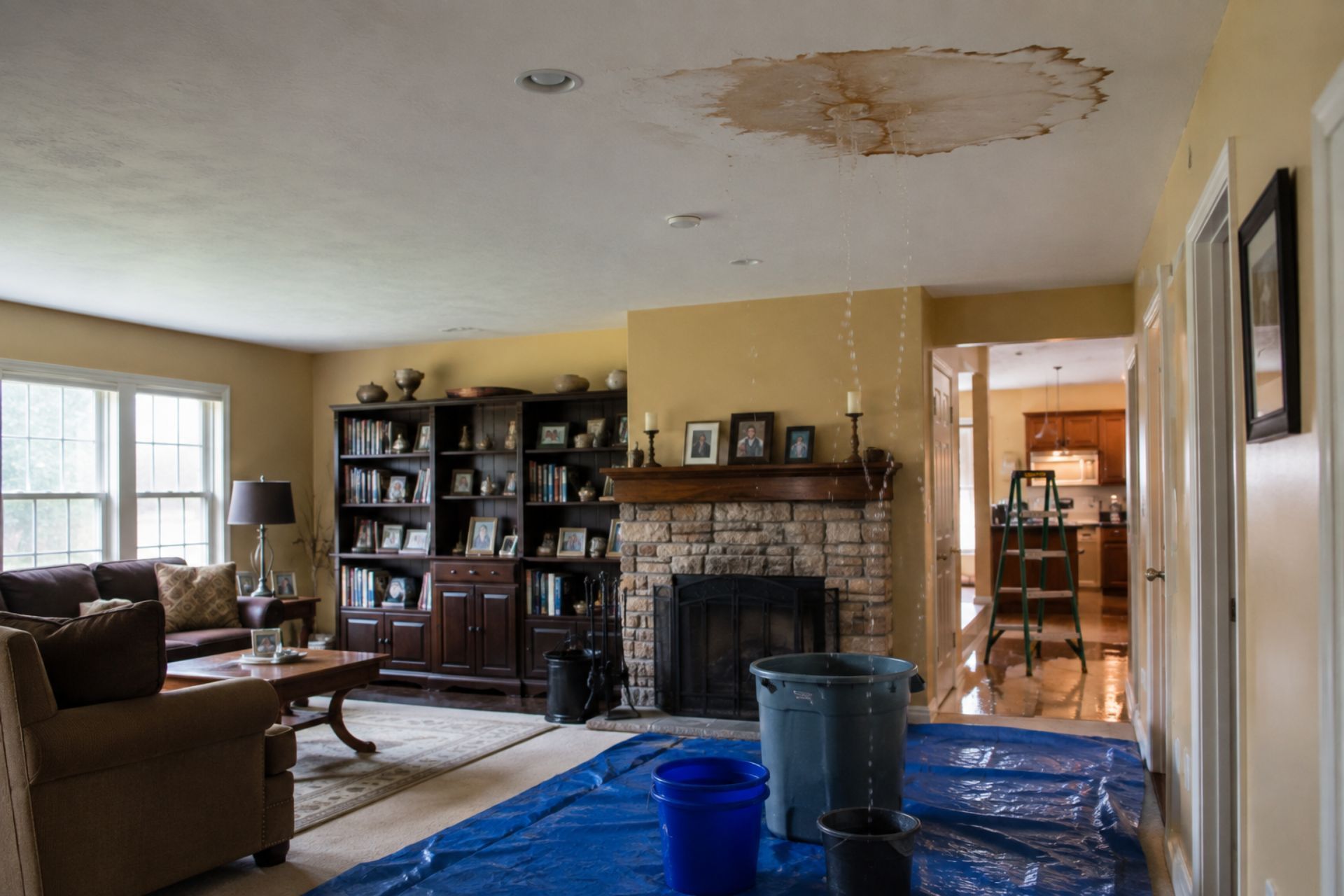

A burst supply line under a second-floor bathroom in a Lebanon rowhome can soak through drywall, ruin hardwood, and send water into the kitchen ceiling before anyone notices. The homeowner files a claim and assumes everything is covered. Then the adjuster asks how long the leak had been dripping, whether the sump pump failed, and why the policy only pays depreciated value on the cabinets.
Situations like this are why home insurance in Lebanon, PA deserves more than a quick online quote. The city's older housing stock, its position along the Quittapahilla Creek, and a statewide spike in premiums all shape what you pay and what you get back after a loss. Pennsylvania homeowners saw a 28.9% inflation-adjusted premium increase between 2021 and 2025, the largest jump among the states analyzed.
That pressure makes every coverage decision count. A policy that looks cheap at signing can leave you writing five-figure checks after a claim, and a policy loaded with coverage you don't need wastes money you could spend on a new roof or a water sensor. What follows breaks down dwelling coverage, personal property, liability, water damage, deductibles, and discounts in plain terms, with the local details that generic guides skip.
Protecting Your Home in Lebanon, PA
Lebanon County housing doesn't fit a single profile. You've got 1900s brick rowhomes downtown, split-levels in Cleona and North Cornwall, newer construction in South Londonderry, and farmhouses scattered across the townships. Each one carries different risks, and insurers price them differently.
Older homes are the biggest source of surprise claims in this area. Knob-and-tube wiring, galvanized pipes, slate roofs, and stone foundations all cost more to repair or replace than modern equivalents. Many carriers will ask about the age of your roof, electrical panel, plumbing, and heating system before they quote. Some will decline older systems outright or require updates within a set period.
Here's what that means for you: the "same" policy on two houses on the same street can produce very different premiums. A 1915 rowhome with an original slate roof and a 2008 townhouse may share a ZIP code, but they don't share a risk profile.
The financial stakes go beyond the premium itself. Philadelphia Fed research found that rising insurance premiums are positively correlated with mortgage delinquency in Pennsylvania. If your escrow payment jumps at renewal, it can squeeze your household budget fast. That's a strong reason to review your policy every year, not just when your lender sends a notice.
One common mistake: buying coverage based on your purchase price or assessed value. Neither number tells you what it costs to rebuild your house. That figure, the rebuild cost, is the foundation of everything else in your policy.

By: Tyler Reitz
Managing Principal of Bowmans Insurance
Core Components of a Standard Homeowners Policy
Most Lebanon homeowners carry an HO-3 policy, the standard form for owner-occupied single-family homes. It splits protection into several coverage parts, each with its own limit. Understanding how they interact helps you spot coverage gaps before a claim exposes them.
Dwelling Coverage and Replacement Costs
Dwelling coverage, often called Coverage A, pays to repair or rebuild the structure of your home. That includes the walls, roof, floors, built-in appliances, plumbing, wiring, and attached structures like a garage or deck. It's the largest limit on your policy, and it drives most of your premium.
The key question is how your policy settles a claim. Two main options exist:
- Replacement cost: Pays what it takes to rebuild with materials of like kind and quality, without subtracting for age or wear.
- Actual cash value (ACV): Pays replacement cost minus depreciation. A 20-year-old roof might get you a fraction of what a new one costs.
Many Lebanon homeowners with older roofs find their carrier has quietly moved roof coverage to ACV at renewal. Read your declarations page and any endorsements carefully.
For historic homes, ask about extended or guaranteed replacement cost. These endorsements add a cushion above your dwelling limit if construction costs spike after a regional storm. You should also look at ordinance or law coverage. If a fire damages half your house, local building codes may require you to bring the whole electrical system up to current standards, and a basic policy often won't pay for that upgrade.
Personal Property and Off-Premises Protection
Personal property coverage, or Coverage C, protects your belongings: furniture, clothing, electronics, tools, and kitchenware. It's usually set as a percentage of your dwelling limit, though you can often adjust it. It also follows your stuff away from home, so a laptop stolen from your car in a Harrisburg parking garage or a bike swiped from your kid's dorm may still be covered, subject to policy limits.
The catch is sublimits. Standard policies cap payouts on certain categories, including:
- Jewelry and watches
- Firearms
- Cash and collectibles
- Silverware
If your grandmother's engagement ring is worth $8,000 and your policy caps jewelry theft at a much lower figure, you'll eat the difference. A scheduled personal property endorsement fixes this and usually covers accidental loss too, like a stone falling out of a setting.
Take a home inventory now. A walkthrough video on your phone, saved to the cloud, can turn a weeks-long claim dispute into a quick settlement.
Liability and Medical Payments to Others
Personal liability coverage pays if you're legally responsible for injuring someone or damaging their property. Think of a guest slipping on your icy front steps in January, your dog biting a neighbor, or your tree falling onto the house next door. It covers legal defense costs too, which can run high even when you win.
Medical payments to others is a smaller, no-fault coverage. It pays minor medical bills for guests injured on your property regardless of who's at fault. This often resolves small incidents before they become lawsuits.
Many policies default to modest liability limits. Given what a serious injury claim can cost, most agents recommend higher limits, and an
umbrella policy adds another layer for relatively little money. If you have a pool, trampoline, or a dog breed some carriers restrict, disclose it. Hiding it can void coverage when you need it most.
Addressing Water Damage and Local Environmental Risks
Water causes more homeowners claim headaches than almost anything else, mostly because people assume all water damage is treated the same. It isn't. Your policy cares about where the water came from and how fast it arrived.
Sudden Pipe Bursts vs. Sewer Backup
Standard homeowners policies cover sudden and accidental water discharge. A pipe that freezes and bursts during a January cold snap, a washing machine hose that splits, or a water heater that ruptures all generally fall into this category. The policy pays to repair the resulting damage and often the cost of tearing out walls to reach the leak.
What it usually won't cover:
- Gradual leaks: A slow drip under the sink that rotted the subfloor over months is considered a maintenance issue.
- Sewer or drain backup: If the municipal line clogs during heavy rain and sewage comes up through your basement floor drain, a standard policy typically excludes it.
- Sump pump failure: Same story. Without an endorsement, water from a failed pump is often denied.
This is one of the most common claim denials we see. A finished basement full of backed-up water can easily mean $15,000 or more in drywall, carpet, and furniture losses. Water backup coverage is an inexpensive endorsement, and in a town with older sewer infrastructure and many finished basements, it's one of the smartest additions you can make.
Flood Insurance Needs in the Lebanon Valley
Flood damage, meaning surface water from rising creeks or heavy rain overwhelming the ground, is excluded from every standard homeowners policy. You need a separate policy through the National Flood Insurance Program or a private flood carrier.
Local risk is shifting. FEMA floodplain map updates in Lebanon County have moved residential areas, such as Barnwell Road in South Londonderry, into high-risk zones. If your property was remapped, your lender may now require flood coverage.
Yet only about
1% of Pennsylvania households carry flood insurance. That's a big gap in a state with as many creeks and river valleys as this one. Buyers are getting more information, though: as of October 2026, Pennsylvania's HB 1704 requires sellers to explicitly disclose a property's flood history and risk to potential buyers. Use that disclosure. Flood policies usually have a waiting period, so don't wait for a storm forecast to buy one.
Understanding Your Deductibles and Limits
Your deductible is the amount you pay before insurance kicks in on a claim. Your limits are the maximum the insurer will pay. Getting both right is where many homeowners either overspend or underinsure.
Most policies offer flat-dollar deductibles, such as $500, $1,000, $2,500, or $5,000. Raising your deductible lowers your premium, sometimes noticeably. The tradeoff is simple: you're taking on more of the small losses yourself.
Here's a practical way to think about it. Say raising your deductible from $1,000 to $2,500 saves you $180 a year. You'd need more than eight claim-free years for the savings to cover the extra $1,500 you'd pay on a single claim. For many homeowners, that's still a good deal, because filing small claims can raise your rates or flag you at renewal anyway. Just make sure you can actually write that check on short notice.
Watch for these deductible details:
- Percentage deductibles: Some policies set wind or hail deductibles as a percentage of your dwelling limit. On a $300,000 home, a 2% deductible means $6,000 out of pocket.
- Separate flood deductibles: Flood policies carry their own deductibles for building and contents.
- Roof-specific terms: Some carriers apply different settlement rules or deductibles to older roofs.
On limits, revisit your dwelling coverage every year. Construction labor and materials have climbed, and a limit set five years ago may not rebuild your house today. Many carriers offer an inflation guard that adjusts limits automatically, but those adjustments don't always keep pace with actual rebuild costs. Underinsuring can also trigger coinsurance penalties on some policies, reducing even partial claim payouts.
Comparison: Standard Coverage vs. Enhanced Endorsements
A basic HO-3 policy handles a lot, but the gaps tend to show up in exactly the situations Lebanon homeowners face most. This table lays out what a typical standard policy does compared to common add-ons.
| Coverage Area | Standard HO-3 Policy | With Enhanced Endorsement |
|---|---|---|
| Roof damage | May pay ACV on older roofs | Replacement cost restored |
| Rebuild cost overruns | Capped at dwelling limit | Extended replacement adds a buffer |
| Code upgrades | Limited or excluded | Ordinance or law coverage pays |
| Sewer/drain backup | Usually excluded | Covered up to endorsement limit |
| Sump pump failure | Usually excluded | Covered with water backup add-on |
| Flood | Excluded | Requires separate flood policy |
| Jewelry theft | Low sublimit | Scheduled at full appraised value |
| Lost jewelry | Not covered | Covered when scheduled |
| Equipment breakdown | Excluded | Covers HVAC, boilers, appliances |
| Service lines | Excluded | Covers buried water and sewer lines |
Not every endorsement makes sense for every home. A newer townhouse with a slab foundation may not need water backup coverage, while a century-old rowhome with a finished basement almost certainly does.
Equipment breakdown and service line coverage are often overlooked. If the clay sewer lateral running from your house to the street collapses, you're usually responsible for the repair, and digging up a yard or sidewalk gets expensive quickly. These endorsements cost little compared with the bills they prevent.
One thing to keep in mind: endorsements are where carriers differ most. Two quotes with the same dwelling limit can offer very different protection once you compare add-ons line by line.
With premiums rising statewide, it pays to chase every legitimate discount. Some savings come from changes to your home, while others come from how you structure your insurance relationship.
Safety and Security Discounts
Insurers reward homeowners who reduce the odds of a claim. Ask your agent about savings for:
- Monitored alarm systems: Central station burglar and fire monitoring often qualifies.
- Water leak detection: Smart shutoff valves and leak sensors are gaining traction with carriers because water claims are so costly.
- Roof updates: A new roof, especially impact-resistant material, can bring real savings and better settlement terms.
- Electrical and plumbing updates: Replacing an outdated panel or galvanized pipes can lower rates and expand your carrier options.
- Smoke and CO detectors, fire extinguishers, and deadbolts: Small items, but they add up.
Keep receipts and permit records for any upgrades. Carriers may ask for proof, and documentation strengthens your position if you ever need to shop your policy. A $400 smart water shutoff valve that earns a discount and prevents a single burst-pipe claim pays for itself many times over.
Bundling and Loyalty Savings
Bundling home and auto with one carrier is the most common discount, and it's often substantial. Adding an umbrella or a policy for a rental property can increase savings further.
That said, loyalty isn't always rewarded. Some carriers raise renewal rates on long-term customers gradually, betting they won't shop around. Compare quotes every couple of years, ideally through an independent agent who can quote several carriers at once.
Other discounts worth asking about include claims-free history, paperless billing, paying in full, autopay, being a new home buyer, and occasionally affiliations with certain employers or professional groups. Pennsylvania insurers also use credit-based insurance scores in pricing, so improving your credit can bring your premium down over time.
Common Questions About Lebanon Home Insurance
Does my homeowners policy cover flooding from the Quittapahilla Creek? No. Flood from rising water is excluded from standard homeowners policies. You need a separate flood policy through the NFIP or a private flood insurer.
Is water in my basement covered? It depends on the source. A burst pipe is usually covered, but sewer backup or sump pump failure typically requires a water backup endorsement.
How much dwelling coverage do I need? Enough to fully rebuild your home at today's construction costs. That's different from your purchase price or market value, so ask your agent for a replacement cost estimate.
Will filing a small claim raise my rates? It can. Many homeowners pay minor repairs themselves and save claims for larger losses, which is why a higher deductible often makes sense.
My carrier switched my roof to actual cash value. Can I change that? Sometimes. You may be able to buy back replacement cost coverage, or replacing the roof may restore it. Shopping other carriers is also an option.
Do I need flood insurance if I'm not in a high-risk zone? It's not required, but it's worth considering. Maps change, as recent Lebanon County updates show, and policies outside high-risk zones are often more affordable.
Making the Right Choice for Your Property
The right home insurance in Lebanon, PA starts with an honest look at your house: its age, its systems, its basement, and its distance from the nearest creek. From there, set a dwelling limit that reflects real rebuild costs, confirm whether your roof is covered at replacement cost, and add water backup and flood coverage where your risk calls for it.
Pick a deductible you can comfortably pay tomorrow, and use safety upgrades and bundling to bring your premium down without stripping out protection you need. Review the whole policy every year, because rising costs and remapped flood zones can change your picture quickly.
Your next step: pull your current declarations page, compare it against the table above, and talk with a local independent agent about any gaps. An hour spent now beats discovering an exclusion while you're standing in a flooded basement.
ABOUT THE AUTHOR:
TYLER REITZ, CIC, CPCU, ARM, AU
As Managing Principal of Bowmans Insurance, I’m passionate about helping businesses and individuals protect what matters most with clarity and confidence. With advanced designations including CIC, CPCU, ARM, and AU, I bring a comprehensive approach to risk management—ensuring every client receives strategic, reliable, and personalized coverage.
Contact Us
Why Work With Us?
Why Choose Bowman Insurance Group for Personal Insurance?


Choice and Transparency
Bowman Insurance Group works for you, not the insurance providers. We offer a wide selection of policies from reputable insurers, giving you options that suit your unique needs. We prioritize clarity and honesty, ensuring you understand each policy’s benefits and limitations.


Your Personal Advocate
Our team is committed to more than policy sales—we’re here to serve as your advocate. We balance your coverage needs with affordability, working to provide you with the best value without compromise. Every decision we support is made with your best interests in mind.


Expert Guidance for Life
Insurance can feel complex, but we’re here to make it simple. With years of experience, our advisors explain policies clearly and keep you informed of relevant changes. You’ll receive consistent support from trusted professionals who understand your needs and are dedicated to helping you make informed choices.
About Bowman's Insurance Group
Over 100 years Delivering Exceptional Service to Our Community
Personal Insurance Coverage in Pennsylvania
Personal Insurance Solutions in Pennsylvania
Home
Insurance
Auto
Insurance
Umbrella
Insurance
Condo
Insurance
Boat
Insurance
Motorcycle Insurance
RV
Insurance
ATV
Insurance
Insurance Client Reviews
Read our
customer reviews


40+
Insurance Partners
98%
Client Retention Rate
100
Years in Business
98%
Satisfaction Rate
Process of Working With A Personal Insurance Agent in Pennsylvania

Step 1: Initial Assessment
Our process begins with a comprehensive review of your personal insurance needs. We’ll assess factors like your lifestyle, family needs, and assets, so you get the coverage that best suits your unique situation.
Step 2: Customized Consultation
Meet with our knowledgeable agents one-on-one to discuss options tailored to your requirements. We aim to clarify your choices and recommend the most suitable coverage, considering both quality and affordability.
Step 3: Policy Selection & Activation
Once we identify the right coverage, we’ll handle the paperwork and activate your policy. Our team ensures a smooth, straightforward process, giving you confidence and peace of mind in your coverage.
Our Experts
Meet Our Team of Professional Insurance Experts
Tyler Reitz CIC, CPCU, ARM, AU
President
Carmen Donachy, CISR
Treasurer and Customer Service Rep
Brian Brassell, CSA, CRPC
Investment Advisor Representative, Director of Financial Services Division
Kassie Swope, CIC, CISR, AINS
Commercial Department Manager
Our News & Blogs
Latest insurance news & blogs