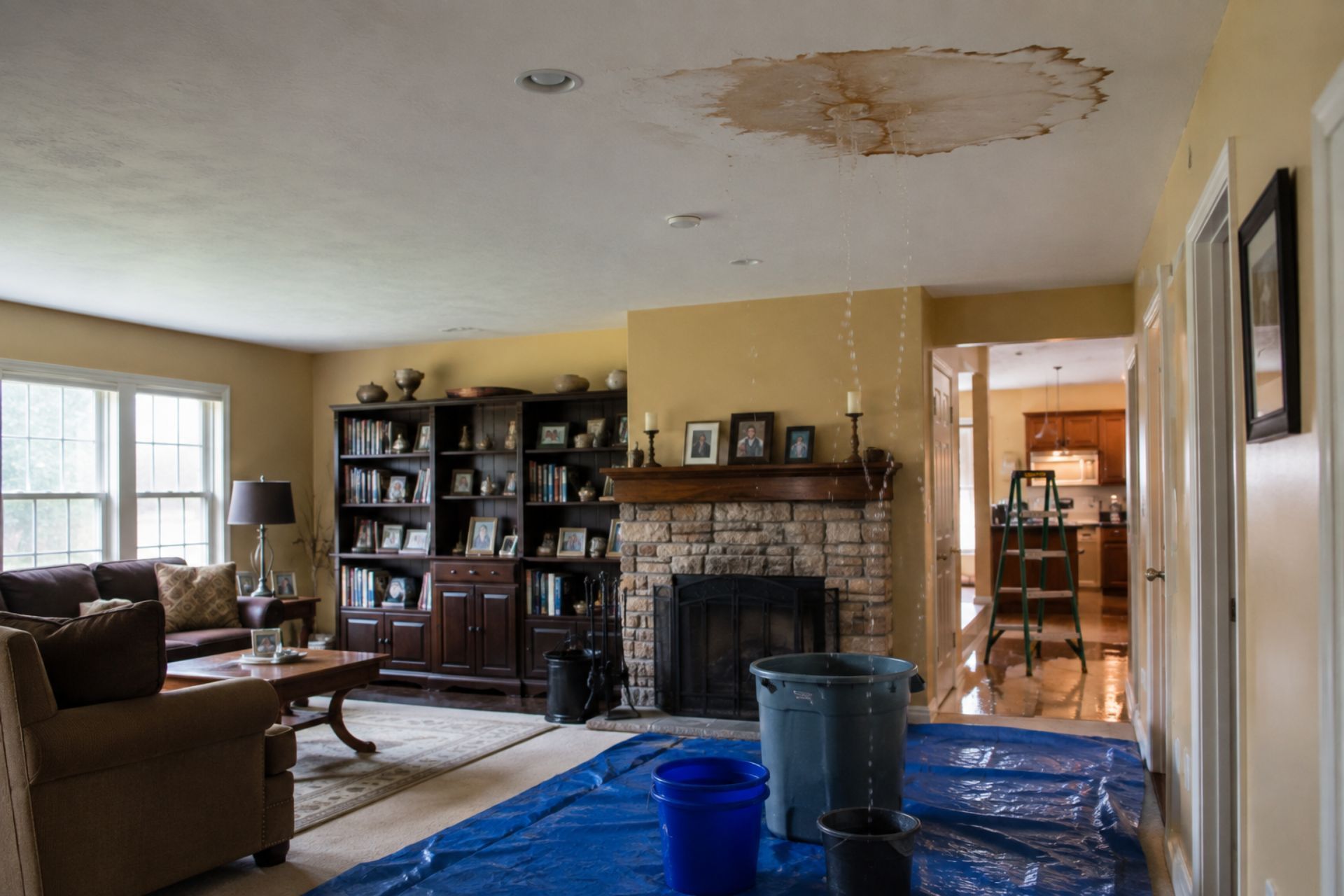

A York roofer finishes a reroof in Spring Garden Township, gets paid, and moves on. Eight months later, a leak at a flashing detail soaks the homeowner's finished attic, ruins drywall and flooring, and triggers a mold claim. The contractor's insurance is the only thing standing between that call and a five-figure check written from the business account.
That's the reality of contracting in York County. The jobs are steady, from rowhome renovations downtown to new builds out toward Dover and Red Lion. But a single gap in coverage can erase a year of profit.
This guide covers contractor insurance in York, PA, including general liability, tools and equipment, commercial auto, workers' compensation, bonds, and certificates. It's written for trades of all sizes, whether you're a one-truck handyman or a growing GC with three crews and a subcontractor list. You'll see where policies tend to fail, what York-area clients and municipalities expect, and how to build a program that grows with your business.
Most contractors don't buy too little insurance on purpose. They buy what someone asked for on a certificate, renew it every year without reading it, and find the holes only when a claim lands. The goal here is to help you find those holes first.
Protecting Your Contracting Business in York, Pennsylvania
York County's building activity has shifted in a way that matters for your risk profile. The City of York Bureau of Permits and Inspections adopted the 2021 Uniform Construction Code effective January 1, 2026, so every new permit application has to meet the updated standards. Statewide, Pennsylvania moved to the 2021 International Codes as the foundation of its UCC on the same date.
Here's what that means for you: new code requirements mean new ways to get things wrong. Energy provisions, ventilation details, and fire-separation rules all create fresh opportunities for faulty-workmanship claims. When an inspector or a later contractor flags a code issue on work you completed, the homeowner's next call is often to their attorney.
Your exposure in York usually falls into a few buckets:
- Third-party injury and property damage on job sites, often in tight rowhome neighborhoods where you're working inches from a neighbor's property
- Theft and damage to tools, trailers, and equipment left on site or in vehicles overnight
- Vehicle accidents on Route 30, I-83, and the back roads between jobs
- Employee injuries, which Pennsylvania law requires you to cover
- Contract and licensing obligations like bonds and proof of insurance
No single policy handles all of these. A sound program layers them so each one picks up where the last leaves off.


By: Tyler Reitz
Managing Principal of Bowmans Insurance
Core Coverage: General Liability and Commercial Auto
These two policies form the backbone of most contractor programs. They're also where the most expensive misunderstandings happen, because contractors assume one covers what the other actually does.
General Liability for York Job Sites
General liability for Pennsylvania contractors typically includes bodily injury, property damage, and completed operations coverage to meet HICPA registration standards. If you do residential home improvement work, the Home Improvement Consumer Protection Act requires registration with the Attorney General's office, and proof of liability coverage is part of that process.
The piece most contractors underestimate is completed operations. That roofer's attic leak from the opening? It happened after the job closed, which is exactly the scenario completed operations exists for. If your policy limits or excludes it, you're exposed.
A few policy details worth checking at every renewal:
- Residential exclusions: some cheaper policies exclude new residential construction or multi-family work entirely
- Subcontractor conditions: many carriers deny claims if your subs lacked their own GL policy
- Action-over and height exclusions: common on roofing and framing policies
- Additional insured endorsements: GCs and property managers will demand these, often with primary and noncontributory wording
One common misconception: general liability does not pay to redo your own faulty work. It covers resulting damage to other property, such as the ruined drywall, but not the cost of fixing the flashing itself.
Commercial Auto for Transporting Gear
Your personal auto policy likely excludes business use, or at least heavy business use. If your F-250 is registered to you personally and you're hauling a trailer of materials to a Hanover job when you rear-end someone, expect your personal carrier to ask hard questions.
Commercial auto covers liability and physical damage for vehicles used in your business. Two coverages get missed most often. First,
hired and non-owned auto protects you when an employee runs to the supply house in their own car. Second, trailers need to be scheduled or otherwise addressed, and the equipment inside the trailer is usually not covered by the auto policy at all. That's the next section's job.
Securing Your Assets: Tools, Equipment, and Inland Marine
Here's a war story that repeats itself across York County every year. A contractor leaves a loaded enclosed trailer at a job site in West Manchester over a holiday weekend. It's gone by Monday, with roughly $18,000 in compressors, nailers, saws, and a laser level inside. The contractor calls his agent, confident the auto policy covers the trailer. It does. It doesn't cover the contents.
That's where inland marine coverage comes in, sometimes called a tools and equipment floater or contractor's equipment policy. It follows your property wherever it goes: in the truck, on the job, in a storage unit.
Good news on pricing. Market rates for tool and equipment coverage are currently running flat to up about 5% thanks to strong competition among carriers. That makes 2026 a reasonable time to review limits rather than just renewing.
When you set up or review the policy, focus on these items:
- Scheduled vs. unscheduled items. Expensive equipment like a skid steer or mini excavator should be listed individually with serial numbers. Hand tools can usually go under a blanket limit.
- Per-item limits. Unscheduled coverage often caps any single item, so a pricey laser transit may only be partially covered.
- Replacement cost vs. actual cash value. ACV pays depreciated value. A five-year-old saw might fetch a fraction of what a new one costs.
- Rented and borrowed equipment. If you rent a lift, check whether your policy covers rented equipment and whether it includes the rental company's loss-of-use charges.
- Theft conditions. Some policies require visible signs of forced entry or locked storage. Read this before you leave a trailer unattended.
Builder's risk is a separate policy that protects the structure under construction and stored materials. On larger projects, confirm who carries it, since owners and GCs often push that responsibility down contractually.

Pennsylvania Workers' Compensation and Bond Requirements
Pennsylvania requires nearly every employer with employees, including part-time workers, to carry workers' compensation. Operating without it isn't a minor paperwork issue. It can bring criminal penalties and personal liability for injury costs.
The trap York contractors fall into most often is misclassifying workers as independent contractors. Paying a laborer on a 1099 doesn't make him a sub. If you control his hours, supply his tools, and he works only for you, the state and your carrier may treat him as an employee. Your workers' comp auditor will look for this, and an uninsured sub's payroll can get added to your premium at audit.
A few practical points:
- Collect certificates from every sub before they step on site. No certificate means their payroll may be charged to you.
- Class codes matter. A carpenter who also does roofing may be rated at the higher roofing class unless payroll is split properly.
- Sole proprietors without employees generally aren't required to cover themselves, but many GCs still won't hire you without a comp certificate or a state exemption form.
On the flip side, safety programs pay real dividends. Your experience modification factor reflects your claims history, and a clean record lowers what you pay. Carriers also reward documented safety training, return-to-work programs, and tight oversight of who's on site.
Understanding York County Bonding Needs
Bonds aren't insurance in the traditional sense. A surety bond guarantees that you'll fulfill an obligation, and if the surety pays a claim, it expects you to pay it back.
In addition to state-mandated liability, Pennsylvania municipalities often require specific license and permit bonds as a condition of local licensure. Requirements vary between York City and surrounding townships, so check with each municipality where you pull permits.
Contract bonds come into play on larger and public work:
- Bid bonds guarantee you'll sign the contract if you win
- Performance bonds guarantee you'll finish the work as specified
- Payment bonds guarantee your subs and suppliers get paid
- Maintenance bonds cover defects for a set period after completion
Picture bidding a $500,000 school addition in a York County district. You'll likely need bid, performance, and payment bonds, and the surety will review your financials, work history, and credit before approving you. Building a relationship with a surety agent early, before you need a big bond, makes that approval far smoother.
Managing Certificates of Insurance (COI)
A certificate of insurance is a one-page snapshot proving you carry coverage. Every GC, property manager, and commercial client will ask for one. It's simple paperwork, yet it causes a surprising amount of trouble.
The most common mistake is assuming the certificate itself grants coverage. It doesn't. If a GC asks to be listed as an additional insured, adding their name to the certificate does nothing unless your policy has the matching endorsement. Clients' attorneys know this, and a mismatched certificate can cost you the contract or leave you in breach.
Build a simple system for certificates:
- Request them from your agent with plenty of lead time. Same-day requests often come with errors.
- Read the client's contract first. Look for required limits, additional insured wording, waivers of subrogation, and primary and noncontributory language.
- Track expiration dates for your own policies and for every sub's certificate you collect.
- Keep copies organized by job. At workers' comp audit time, you'll need proof that each sub was insured during the period they worked.
That last point saves real money. Contractors who can't produce subs' certificates at audit routinely see their premium jump because uninsured subcontractor payroll gets added back in.
Comparing Coverage: Essential vs. Comprehensive Plans
Not every contractor needs the same program. A solo painter and a 15-person general contractor face different risks. This chart shows how a basic setup compares with a fuller program built for growth.
| Coverage Area | Essential Plan | Comprehensive Plan |
|---|---|---|
| General Liability | Standard limits, basic completed ops | Higher limits, broad completed ops, blanket additional insured |
| Commercial Auto | Owned vehicles only | Owned, hired, and non-owned autos |
| Tools & Equipment | Blanket limit, ACV | Scheduled heavy equipment, replacement cost, rented gear |
| Workers' Comp | State-required coverage | Plus safety program support and audit help |
| Bonds | License and permit bonds | Plus established surety line for bid and performance bonds |
| Umbrella | None | Excess limits over GL, auto, and employer's liability |
| Professional Liability | None | Included for design-build or specialized trades |
That last row deserves attention for electricians. House Bill 2619, introduced in June 2026,
proposes a statewide licensing system for electrical contractors. One key provision would mandate that licensed electrical contractors maintain professional liability insurance, with the amount set by a new State Board of Electrical Licensure. It's not law yet, but York electricians should watch it closely.
Common Questions About Contractor Insurance in York
Do I need insurance to register as a home improvement contractor in Pennsylvania? Yes. HICPA registration requires proof of general liability coverage, so you can't legally perform covered residential home improvement work without it.
Does my general liability policy cover my tools? No. General liability covers damage you cause to others. Your own tools and equipment need an inland marine or tools floater.
I only have one part-time helper. Do I need workers' comp? In most cases, yes. Pennsylvania's requirement applies to part-time employees, not just full-time crews.
What's the difference between a bond and insurance? Insurance protects you. A bond protects your client, and if the surety pays a claim, you're expected to reimburse it.
How fast can I get a certificate of insurance? Many agents turn standard certificates around within a day. Certificates requiring new endorsements, like additional insured status, can take longer, so request early.
Will a bad credit score stop me from getting bonded?
Not always, but it can limit your bond amounts and raise your rate. Small license bonds are often easier to get than large performance bonds.
The contractors who come through claims cleanly aren't lucky. They read their policies, collect certificates from every sub, and adjust coverage as the business changes. With York and the rest of Pennsylvania now on the 2021 codes, and electrical licensing legislation in play, 2026 is a smart year to take a hard look at your program.
Start with a few concrete moves:
- Pull your current policies and confirm completed operations, additional insured, and subcontractor conditions.
- Inventory your tools and equipment with serial numbers and current replacement values.
- Audit your crew classifications to make sure no one on a 1099 should be on payroll.
- Check bonding requirements in every municipality where you pull permits.
- Sit down with an agent who writes contractor policies daily and can build a York-specific program, not a generic package.
Good contractor insurance doesn't just satisfy a GC's paperwork. It's what lets you bid bigger jobs, hire with confidence, and sleep through the night after a crew leaves a site.
ABOUT THE AUTHOR:
TYLER REITZ, CIC, CPCU, ARM, AU
As Managing Principal of Bowmans Insurance, I’m passionate about helping businesses and individuals protect what matters most with clarity and confidence. With advanced designations including CIC, CPCU, ARM, and AU, I bring a comprehensive approach to risk management—ensuring every client receives strategic, reliable, and personalized coverage.
Contact Us
Why Work With Us?
Why Choose Bowman Insurance Group for Personal Insurance?


Choice and Transparency
Bowman Insurance Group works for you, not the insurance providers. We offer a wide selection of policies from reputable insurers, giving you options that suit your unique needs. We prioritize clarity and honesty, ensuring you understand each policy’s benefits and limitations.


Your Personal Advocate
Our team is committed to more than policy sales—we’re here to serve as your advocate. We balance your coverage needs with affordability, working to provide you with the best value without compromise. Every decision we support is made with your best interests in mind.


Expert Guidance for Life
Insurance can feel complex, but we’re here to make it simple. With years of experience, our advisors explain policies clearly and keep you informed of relevant changes. You’ll receive consistent support from trusted professionals who understand your needs and are dedicated to helping you make informed choices.
About Bowman's Insurance Group
Over 100 years Delivering Exceptional Service to Our Community
Personal Insurance Coverage in Pennsylvania
Personal Insurance Solutions in Pennsylvania
Home
Insurance
Auto
Insurance
Umbrella
Insurance
Condo
Insurance
Boat
Insurance
Motorcycle Insurance
RV
Insurance
ATV
Insurance
Insurance Client Reviews
Read our
customer reviews


40+
Insurance Partners
98%
Client Retention Rate
100
Years in Business
98%
Satisfaction Rate
Process of Working With A Personal Insurance Agent in Pennsylvania

Step 1: Initial Assessment
Our process begins with a comprehensive review of your personal insurance needs. We’ll assess factors like your lifestyle, family needs, and assets, so you get the coverage that best suits your unique situation.
Step 2: Customized Consultation
Meet with our knowledgeable agents one-on-one to discuss options tailored to your requirements. We aim to clarify your choices and recommend the most suitable coverage, considering both quality and affordability.
Step 3: Policy Selection & Activation
Once we identify the right coverage, we’ll handle the paperwork and activate your policy. Our team ensures a smooth, straightforward process, giving you confidence and peace of mind in your coverage.
Our Experts
Meet Our Team of Professional Insurance Experts
Tyler Reitz CIC, CPCU, ARM, AU
President
Carmen Donachy, CISR
Treasurer and Customer Service Rep
Brian Brassell, CSA, CRPC
Investment Advisor Representative, Director of Financial Services Division
Kassie Swope, CIC, CISR, AINS
Commercial Department Manager
Our News & Blogs
Latest insurance news & blogs